A full paver driveway or a combined patio-and-outdoor-kitchen project can easily land in the $15,000-$45,000 range in the Charlotte area, and most homeowners aren't paying that out of a checking account without giving financing some thought. We're not lenders, but we walk enough homeowners through this decision that it's worth laying out plainly what the common options actually look like, where each one tends to make sense, and what to check before signing anything. None of this is financial advice specific to your situation — talk to your bank or credit union about your actual numbers — but knowing the landscape of options before that conversation makes it a lot more productive.
How project size usually drives the financing decision
There's a rough pattern we see repeat across projects. Smaller jobs under roughly $5,000 — a walkway, a small patio addition, a repair — often get paid with cash, a card, or a short contractor payment plan, because the amount doesn't justify the paperwork of a loan. Mid-size projects in the $10,000-$25,000 range, like a full patio or a modest driveway, are where personal loans and contractor financing partnerships tend to show up most. Larger combined projects — a driveway plus a patio plus a retaining wall, for example — are where a HELOC starts making more sense, mostly because of the lower rate on a larger balance carried over a longer term.
Contractor financing and payment plans
Many hardscape contractors, us included, can connect homeowners with third-party financing partners that offer promotional terms like 12 months no-interest if paid in full, or fixed monthly payments over a set term. The appeal is speed — approval often happens the same day, sometimes within minutes, and it's handled alongside signing the project contract rather than as a separate errand. The catch to watch for is what happens after a promotional period ends: some of these plans carry deferred interest, meaning if the balance isn't paid off by the promo deadline, interest gets charged retroactively on the entire original amount, not just the remaining balance. Always ask directly whether interest is deferred or simply waived going forward. Approval amounts on these programs also tend to have a ceiling — often somewhere around $25,000-$35,000 depending on the lender and the applicant's credit — so it works well for a patio or driveway but may not stretch to cover a full backyard renovation with a retaining wall and outdoor kitchen included.
Home equity line of credit (HELOC)
A HELOC uses your home's equity as collateral, typically offering a lower interest rate than an unsecured personal loan or a card, which makes it attractive for larger projects. It's also flexible — you draw only what you need, which works well if a project's final cost isn't fully locked in yet, like a driveway job where site conditions could add a change order. The tradeoffs: it takes longer to set up than contractor financing, usually a few weeks rather than a same-day approval, and because it's secured by your home, missed payments carry more consequence than an unsecured loan would. It's also worth checking whether the line carries a variable rate, since a HELOC opened during a low-rate period can see payments climb over a multi-year project timeline if rates move.
Personal loans
An unsecured personal loan through a bank or credit union doesn't touch your home equity, and approval is usually faster than a HELOC — often within a few days. Rates run higher than a HELOC since there's no collateral backing it, but the fixed monthly payment and fixed payoff timeline make budgeting predictable, which a lot of homeowners prefer over a revolving line. This tends to be the middle-ground choice for mid-size projects where a homeowner wants speed without going through a home equity process.
Credit cards for smaller jobs
For a smaller project or a repair, a card can make sense, particularly if it's one with a 0% introductory APR period long enough to pay it off before interest kicks in. Beyond a few thousand dollars, though, card interest rates make this the most expensive option on the list if the balance isn't paid off quickly, so we generally only recommend it for jobs small enough to realistically clear within a few months. Some cards also earn rewards or cash back on large purchases, which a few homeowners factor in for a smaller job they were planning to pay off fast anyway — but that math only works if the balance genuinely gets cleared before interest starts accruing.
Questions to ask before signing any financing agreement
- Is the promotional rate deferred interest or simple 0% interest — what happens if I don't pay it off in time?
- What's the total cost over the full term, not just the monthly payment?
- Is there a prepayment penalty if I pay the balance off early?
- Does the financing get finalized before or after the project starts, and what happens if it falls through mid-project?
- Is the rate fixed for the full term, or can it adjust?
A real Charlotte scenario: a Ballantyne homeowner's financing decision
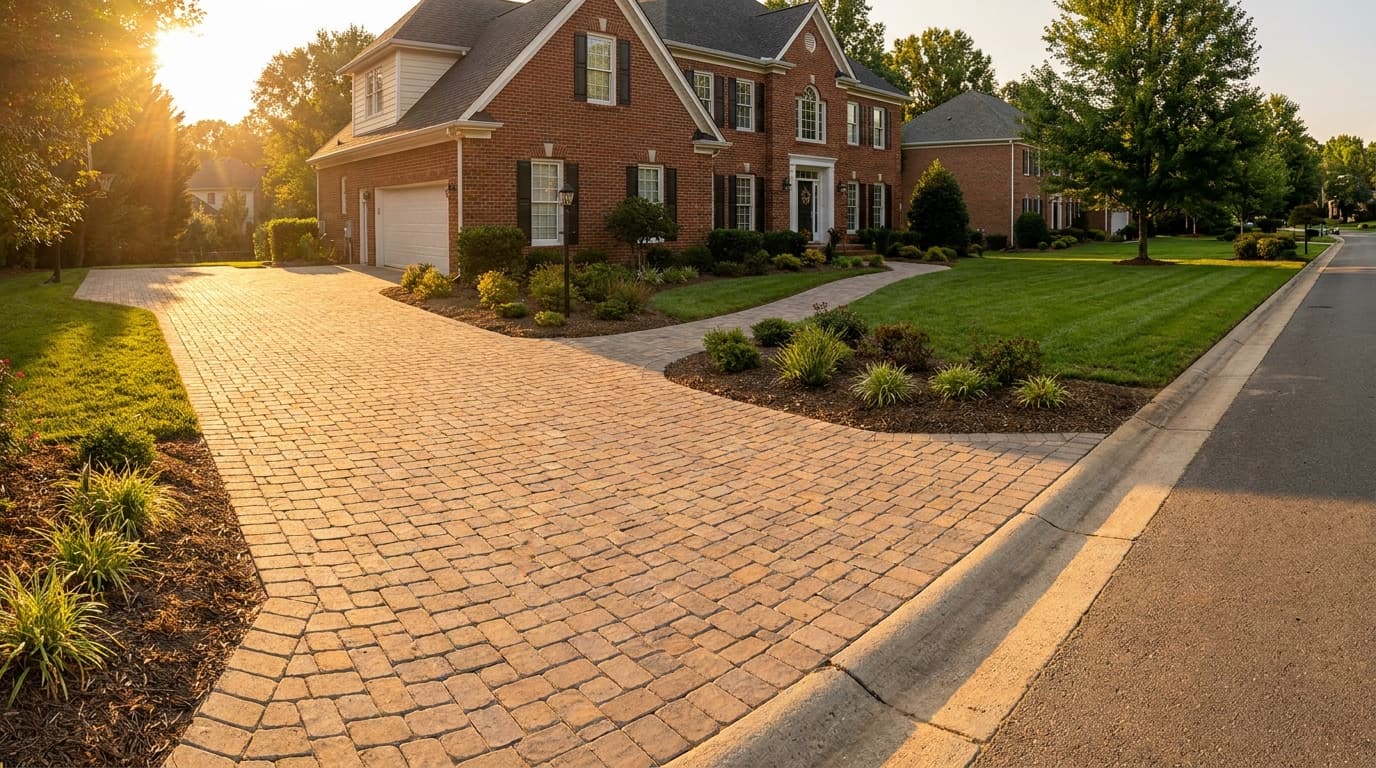
A homeowner in Ballantyne came to us with a combined driveway and front walkway project priced at $22,400. She'd initially planned to use a credit card but changed course once she ran the math on interest beyond the card's introductory period. She ended up splitting the decision: a personal loan through her credit union covered the bulk of the project at a fixed rate over three years, and she paid a smaller portion — the walkway addition, about $4,100 — up front in cash to keep the loan amount lower. That kind of split isn't unusual; plenty of homeowners blend a loan with a cash contribution rather than financing the entire project.
Frequently Asked Questions
Most financing partners want a firm project amount before approving a loan, so it's best to lock in your quote first, then apply. Some contractor financing programs can pre-qualify you for a range before the final number is set.
No. Once financing is approved and funds are secured, the project runs on the same timeline and to the same specifications as a cash-paid job. Financing only affects how you pay, not what gets built.
Yes, and it's worth asking about upfront. If a full driveway-and-patio combination doesn't fit comfortably within a loan amount, phasing the project — driveway now, patio next year — is often a reasonable way to keep monthly payments manageable.
Not necessarily, but it usually means a higher rate or a lower approved amount. It's worth getting pre-qualified with more than one lender, since promotional contractor financing programs and traditional loans can have different approval criteria.
Planning something similar? See how we approach paver patio installation in Charlotte and the surrounding metro, or find your town in our service area.
Get a Free Estimate
Tell us your budget range and we'll help you figure out what scope fits it before you commit to any financing option.
Get a Free Estimate