The number on a paver estimate is only as honest as the line items behind it. We regularly get called in for second opinions after a homeowner's original contractor came back mid-project with a change order that added $1,800 to $4,500 to a job that looked fully priced on paper. Almost every time, the added cost traces back to something that was never actually in the original bid — it just wasn't obvious until the crew hit dirt. The frustrating part for homeowners is that by the time a change order shows up, the yard's already torn up and switching contractors mid-project is far more painful than it would have been to ask the right questions before signing.
Why low bids and change orders travel together
A contractor competing purely on price has a limited number of ways to shave a number down: thinner base, cheaper edge restraint, no fabric, no haul-off, or simply not pricing site conditions they haven't seen yet. Some of that shows up as a lower-quality job you'll live with for years. The rest shows up as a change order once the crew is already on site and you're not in a position to easily walk away. Knowing which line items commonly go missing lets you ask about them before you sign, not after the base is half dug. In our experience, the projects that end up with the biggest change orders almost always started as the lowest of three bids — not because low bids are dishonest, necessarily, but because a number that low usually got there by leaving something out rather than by being genuinely more efficient.
Base depth and geotextile fabric
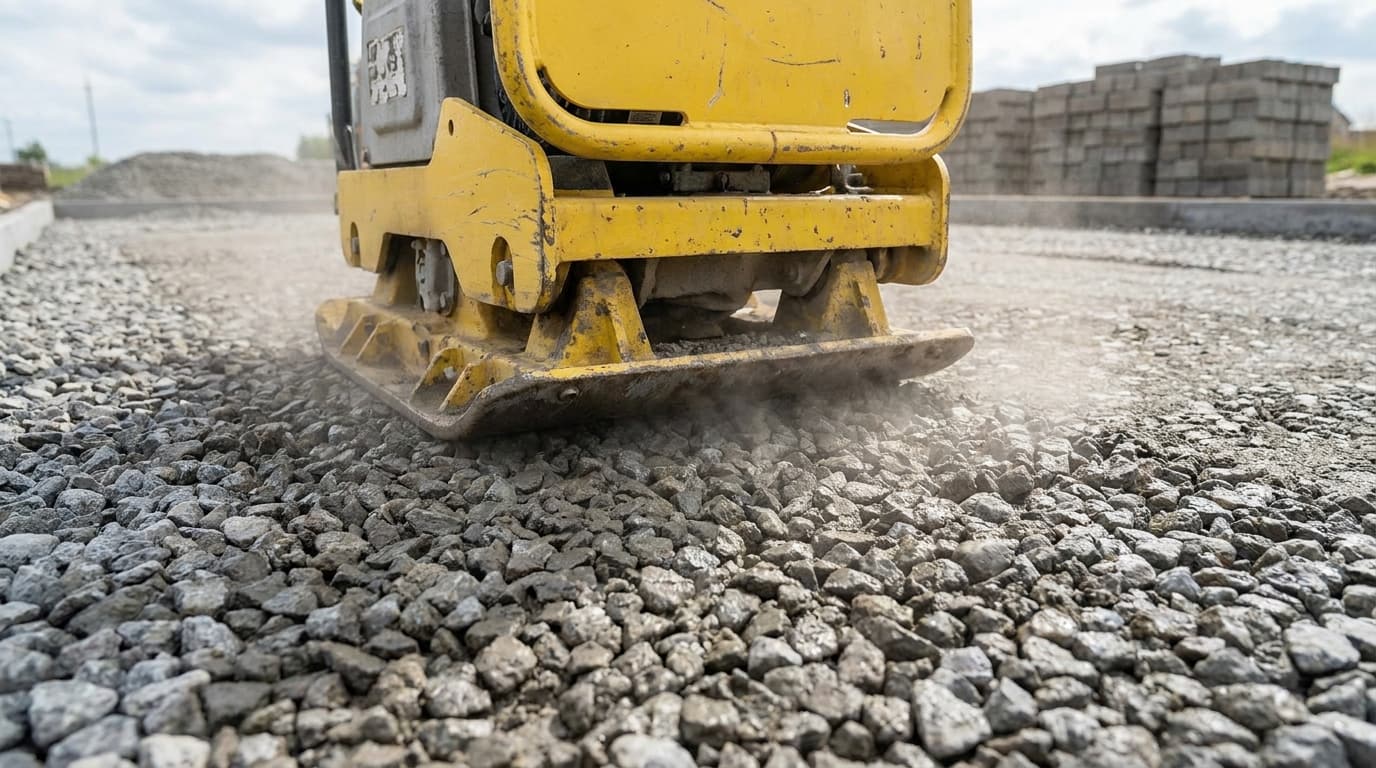
A compacted aggregate base is most of what makes a paver surface last, and it's also one of the easiest things to underprice without a homeowner noticing, because you can't see it once the pavers are down. A patio built on a 2-inch base instead of a proper 4-inch base will look identical on install day and start showing low spots and shifting within a year or two. Geotextile fabric between the soil and the base — which keeps the base material from working its way down into softer native soil over time, especially in Charlotte's clay-heavy ground — is another item that quietly disappears from bare-bones quotes. Skipping fabric can shave $1-$2 per square foot off a bid, which adds up fast on a large driveway and is invisible to a homeowner walking the finished surface. Ask directly: what's the base depth, what material is it, and is fabric included.
Disposal and haul-off fees
Removing an old patio, a section of lawn, or excess excavated soil isn't free, and hauling it away typically adds $400-$1,200 depending on volume and dump fees. Some quotes fold this in; plenty don't, and it turns up as a separate line once the old material is already sitting in a pile on the driveway.
Drainage work
If your yard has any slope toward the house, standing water after a storm, or a downspout dumping near the new patio footprint, drainage work needs to be part of the estimate from day one — not discovered after the first heavy rain following installation. A French drain tie-in or a catch basin can add $800-$2,500 depending on length and depth. A bid that doesn't mention drainage at all for a yard with an obvious grading issue is a bid that's going to need a change order.
Permit fees
Mecklenburg County and surrounding municipalities can require permits for certain hardscape work, particularly retaining walls over a certain height or projects that affect drainage or setbacks. Permit fees typically run $100-$400 plus the time it takes to pull them, and inspection scheduling can add a few days to a project timeline that a bid focused only on labor and material never accounts for. Ask directly whether a permit is needed for your project and whether the fee and the paperwork are included in the quoted price or billed separately — and who's responsible for scheduling the inspection if one's required.
Edge restraint quality and polymeric sand
Plastic spike edging is the cheapest way to hold a paver field in place, and it's also the most common failure point we see on patios that start spreading and shifting within a couple of years. A mortared or concrete edge restraint costs more upfront but holds far better long term. Similarly, basic joint sand versus polymeric sand is a real cost difference — polymeric sand resists washout and weed growth far better, and swapping it in after the fact means pulling pavers back up.
A checklist to run before you sign
Before you sign any paver contract, go through this list line by line and ask the contractor to confirm each item in writing:
- Compacted base depth and material, stated as a number of inches, not "standard"
- Geotextile fabric, included or not
- Haul-off and disposal of old material or excavated soil
- Drainage assessment for your specific yard, not a generic mention
- Permit responsibility and whether the fee is in the total
- Edge restraint type — plastic, mortared, or concrete
- Joint sand type — basic sand or polymeric sand
- Workmanship warranty length and what it names specifically
If a contractor can't answer one of these without going quiet or vague, that's usually the exact item that turns into a change order later.
A real Charlotte scenario: a change order in Matthews
A homeowner in Matthews signed a contract with another company for a 340-square-foot patio at what looked like a competitive $9,100. Once the crew excavated, they hit a section of soft, saturated clay near the back corner where a downspout had been draining onto the lawn for years. The original quote had no drainage line item and no allowance for poor soil conditions, so the homeowner got hit with a $2,300 change order mid-project to correct the drainage and stabilize the base before work could continue — a 25% jump over the original signed price. She called us afterward, and we walked the same yard with her — the downspout issue was visible from the driveway before a single quote was written. It should have been priced in from the start, and a base-depth and drainage line item on the original bid would have caught it before a shovel ever went into the ground.
Frequently Asked Questions
Just ask directly and in writing: "Is base depth, haul-off, and drainage work included in this number, or are those separate?" A contractor with nothing to hide will answer plainly and won't take offense.
Occasionally, yes — sometimes you genuinely can't know what's under the soil until it's excavated, like unexpected rock or old buried debris. The difference is whether the original quote accounted for foreseeable conditions like visible drainage problems, versus a bid that simply left things out to look competitive.
It's worth asking, though most reputable contractors will price known conditions firmly and only reserve change orders for genuinely unforeseeable ones, like hitting solid rock during excavation.
Planning something similar? See how we approach paver patio installation in Charlotte and the surrounding metro, or find your town in our service area.
Get a Free Estimate
Ask us to walk your yard and price what's actually there — drainage, soil, and all — before you sign anything.
Get a Free Estimate