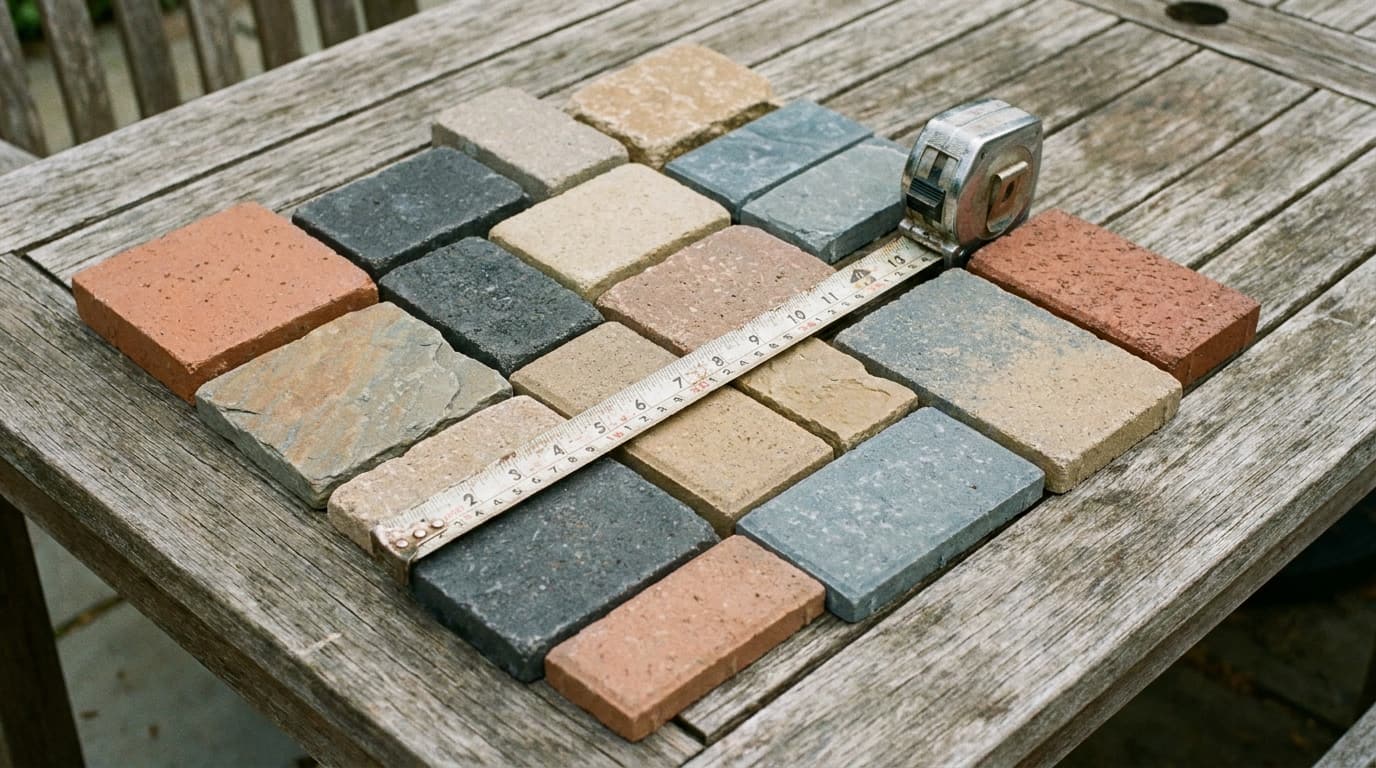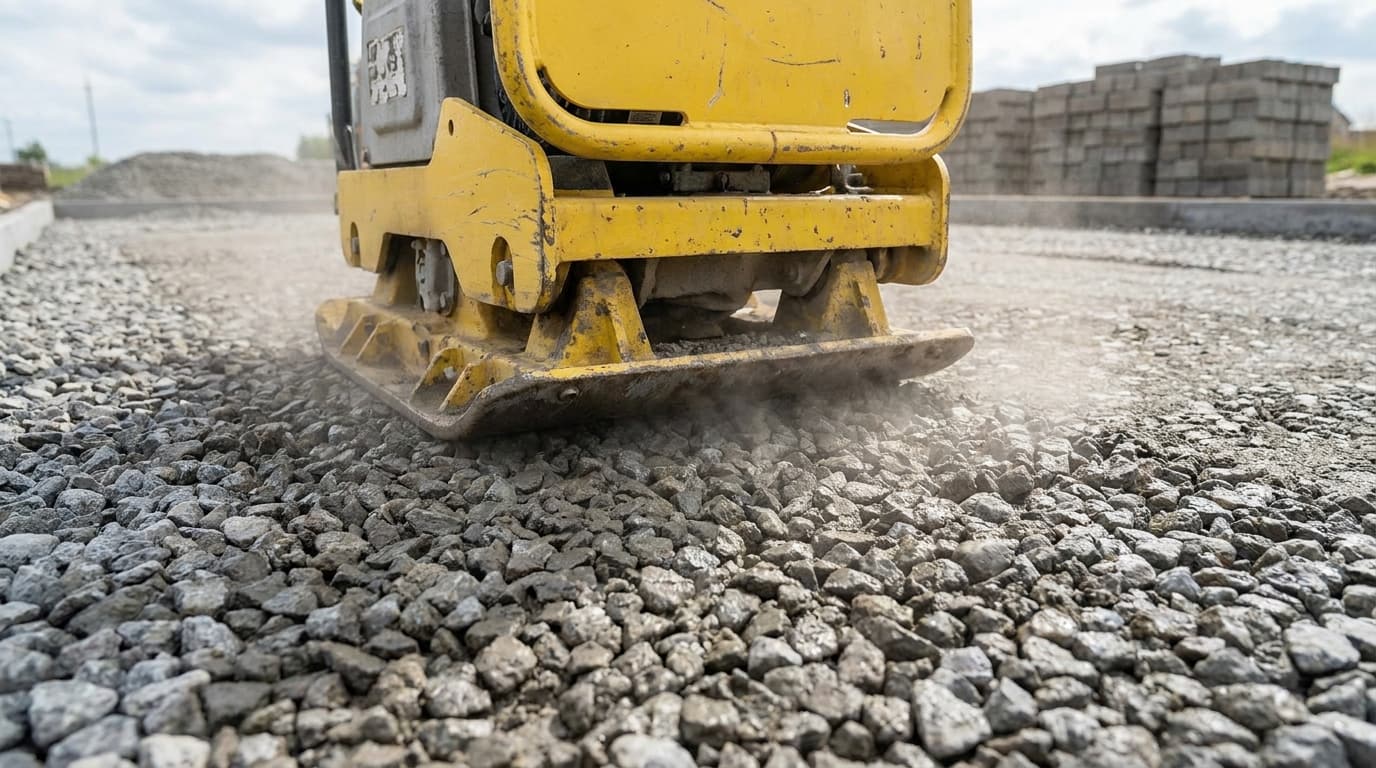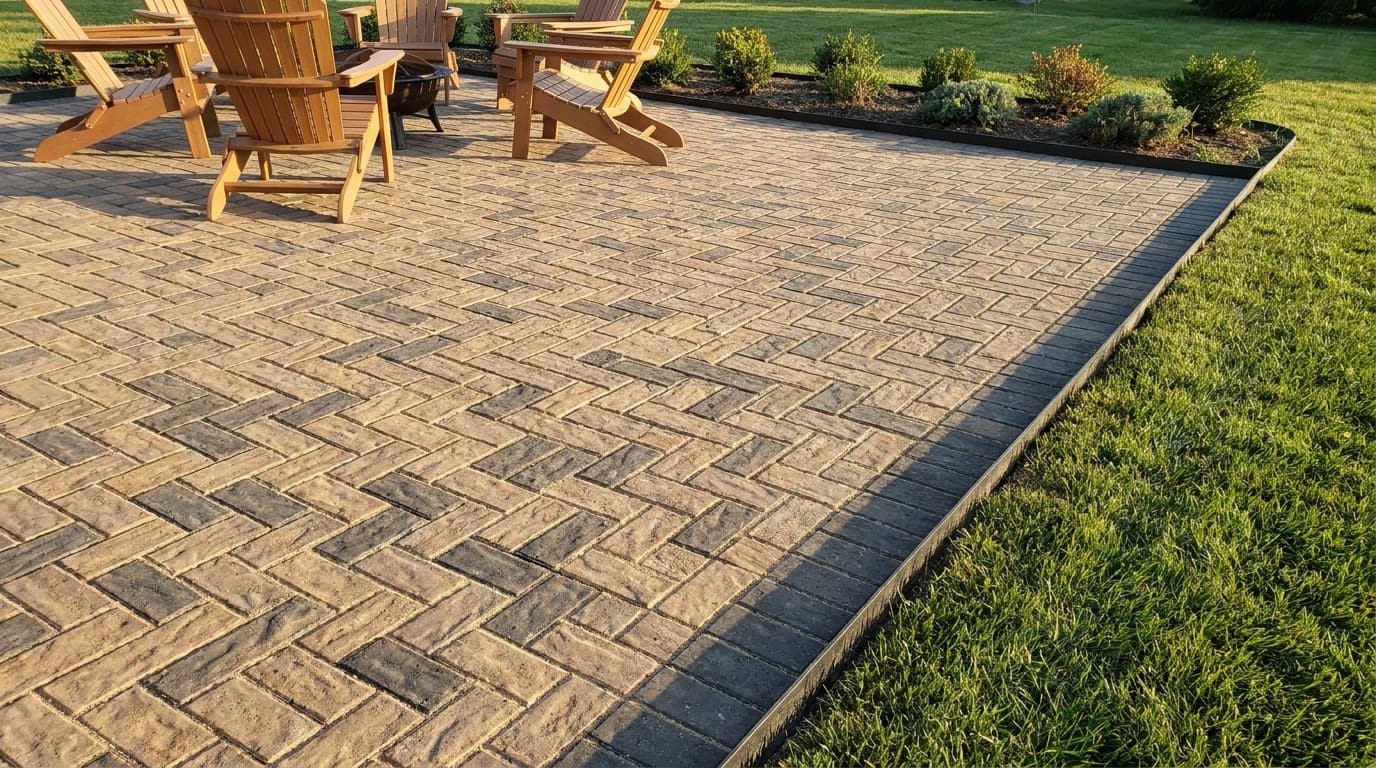
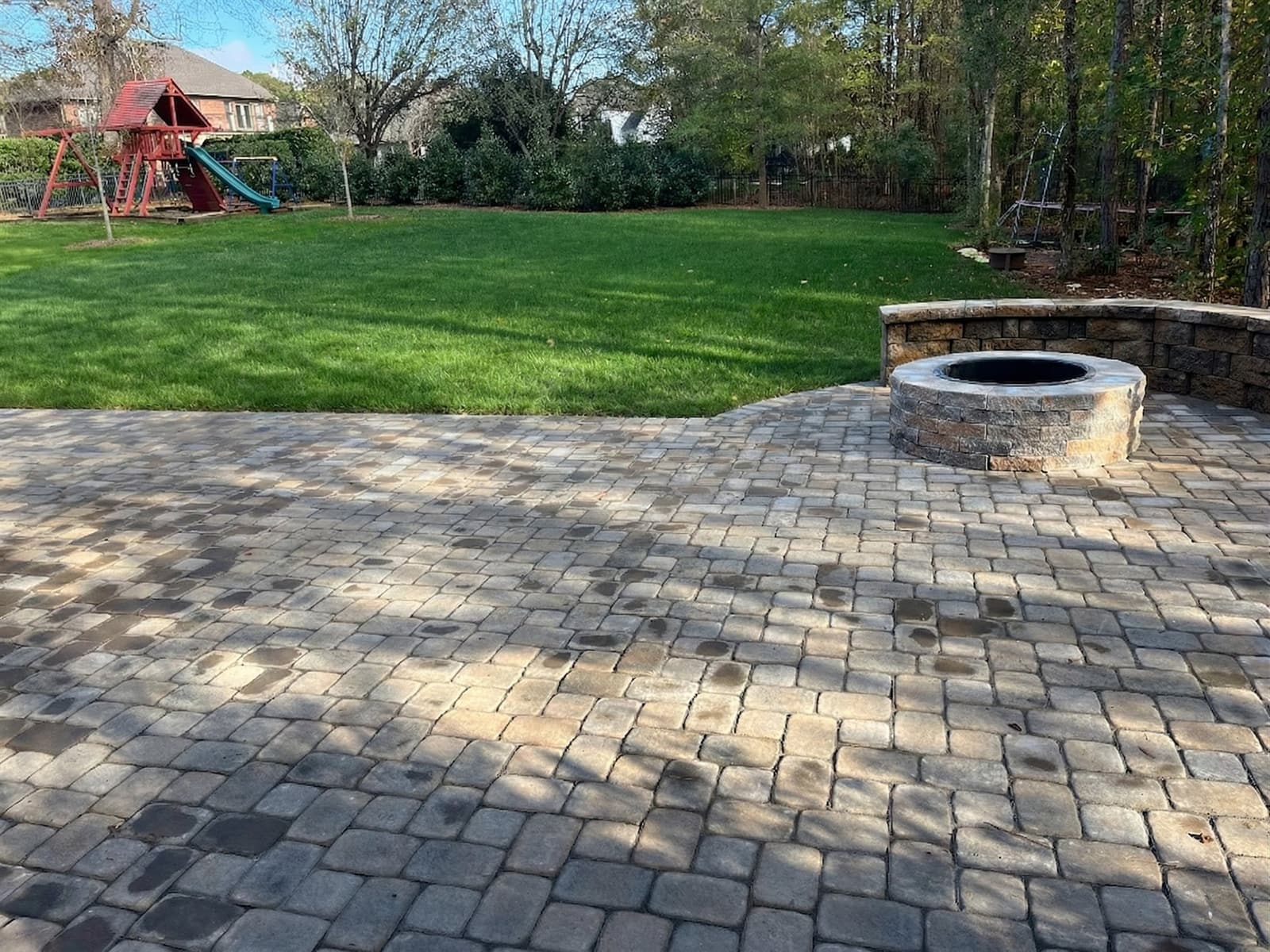
Pavers vs stamped concrete is the comparison Charlotte homeowners ask us about most often. Both can look beautiful. Both cost real money. The honest comparison — not the salesperson version — comes down to how each material ages in our North Carolina climate, how each fails, and what each costs over 20 years rather than on day one.
The short version
- Stamped concrete costs less up front, looks great year one, but cracks within 5–15 years in NC freeze-thaw and the crack is permanent.
- Pavers cost more up front but flex with soil movement, last 25–50 years, and individual units can be replaced invisibly.
Both are legitimate choices. The right one depends on your budget, how long you'll stay in the home, and your tolerance for visible cracks.
Up-front cost comparison
For a typical 400 sq ft patio in Charlotte:
- Plain concrete: $3,200–$5,600
- Stamped concrete: $6,400–$11,200
- Mid-grade pavers: $9,000–$15,000
- Premium pavers: $14,000–$22,000
Stamped concrete sits roughly 30–40% below paver costs at install. That gap is the main reason it gets chosen.
How each material ages in Charlotte
Stamped concrete in NC:
- Hairline cracks usually appear in 3–7 years
- Visible cracks by 5–10 years
- Color sealer wears off and needs reapplication every 2–4 years
- Cracks cannot be invisibly repaired
- Surface stamping pattern shows wear in high-traffic zones
Pavers in NC:
- Settling can be re-leveled by lifting and re-bedding pavers
- Stains can be addressed by swapping individual units
- Polymeric sand needs occasional top-up every 5–8 years
- No visible cracking even after decades
- Color holds well, especially with periodic sealing
Why concrete cracks in Charlotte (and stamped concrete shows it more)
Charlotte gets significant freeze-thaw activity each winter, and our red clay subsoil expands and contracts with moisture. Concrete is rigid. When the ground moves, concrete cracks — it has no choice. Stamped concrete cracks the same way plain concrete does, but the crack runs across the decorative pattern, making it impossible to hide.
Control joints reduce random cracking but don't eliminate it. And the joints themselves interrupt the stamped pattern.
Repair reality
When a paver settles, we pull it, re-bed the base, drop it back in. Cost: $50–$200 per spot. Visible result: nothing.
When stamped concrete cracks, options are:
- Live with it — most common
- Fill with caulk and try to color-match — visible
- Resurface the entire patio — $4–$8 per sq ft and looks like a patch
- Demo and replace — full cost again
The repair gap is where the lifetime cost story actually lives.
Slip resistance and heat
- Stamped concrete can be slick when wet, especially with smooth sealers
- Pavers have natural texture and joint lines that grip better
- Both get hot in Charlotte summer; lighter colors stay cooler
- Around pools, paver pool decks are significantly safer underfoot
Aesthetic comparison
- Stamped concrete can mimic slate, flagstone, brick, or wood plank patterns
- Pavers look like actual stone or brick because they are individual units
- From 20 feet away, stamped concrete can look convincing
- From 3 feet away, pavers look more authentic
- Pavers offer easier design flexibility — borders, color blends, curves
When stamped concrete is the right call
Honestly — and this isn't what most paver installers say — stamped concrete makes sense when:
- Your budget is firmly under $7,500 for a 400 sq ft patio
- You're planning to sell within 5 years
- The patio is in a low-visibility area
- You want a specific stamped pattern (like wood plank) hard to replicate in pavers
- You don't mind resealing every few years
When pavers are clearly the right call
- You're staying in the home 10+ years
- You've had concrete crack on you before
- The patio is highly visible (front entry, main backyard)
- You want curves, borders, or multi-color design
- You'd rather pay more once than less twice
Maintenance comparison
- Stamped concrete: Reseal every 2–4 years ($300–$800), crack repair as needed
- Pavers: Polymeric sand refresh every 5–8 years ($200–$500), optional sealing every 3–5 years ($400–$1,200)
Over 20 years, paver maintenance and stamped concrete maintenance often end up similar — but pavers don't have the visible-crack problem.
A Pineville case study
A homeowner in Pineville installed a 500 sq ft stamped concrete patio in 2015 for $5,800. By 2022, three significant cracks ran across the stamped pattern, and the sealer had worn through in front of the grill. They had it removed and a paver patio installed for $14,000 in 2023. Total spent over 8 years: $19,800. A paver patio in 2015 would have cost roughly $11,000 and still be flawless.
This isn't every story — but it's a common one.
Frequently Asked Questions
Yes — stamped concrete typically costs 30–40% less than pavers on day one. Over 15–20 years, the cost gap narrows once you account for resealing, crack repair, and potential resurfacing.
Almost always, eventually. Charlotte's freeze-thaw cycles and clay soil movement make crack-free stamped concrete extremely rare past 10–15 years. Control joints reduce random cracking but don't eliminate it.
Sometimes, with the right thin-paver system, but it's not always the right approach. Existing cracks in the concrete will eventually telegraph through. We usually recommend removing the old concrete and starting with a proper base.
Pavers typically add more resale value in Charlotte, especially in mid-to-upper-tier neighborhoods. Appraisers and buyers both recognize pavers as a longer-lasting, higher-quality material.
Planning something similar? See how we approach paver patio installation in Charlotte and the surrounding metro, or find your town in our service area.
Get a Free Estimate
If you're weighing pavers vs stamped concrete for your Charlotte patio, we'll give you honest numbers for both — including the option we'd build for our own home.
Get a Free Estimate