Travertine vs concrete pavers comes down to one honest question for Charlotte homeowners: how much are you willing to pay to keep bare feet comfortable in July? Travertine runs meaningfully cooler and looks like stone because it is stone. Concrete pavers cost less, take more abuse, and last longer around pool chemicals. Both work here. Both fail here in specific, predictable ways.
Surface Temperature on a 95°F July Afternoon
This is where travertine earns its price. On a 95°F Charlotte afternoon with full sun, light ivory travertine typically measures somewhere around 105 to 120°F at the surface. Standard gray or tan concrete pavers in the same conditions commonly read 125 to 140°F.
Skin discomfort starts around 125°F and pain comes fast above 140°F. That difference decides whether kids sprint across the deck or walk on it.
Color matters more than material in some cases. A light cream concrete paver beats a dark charcoal one by a wide margin. If you love the look of dark pavers, understand you are choosing a surface people will avoid barefoot from noon to five in Ballantyne and Weddington backyards.
Slip Resistance When Wet
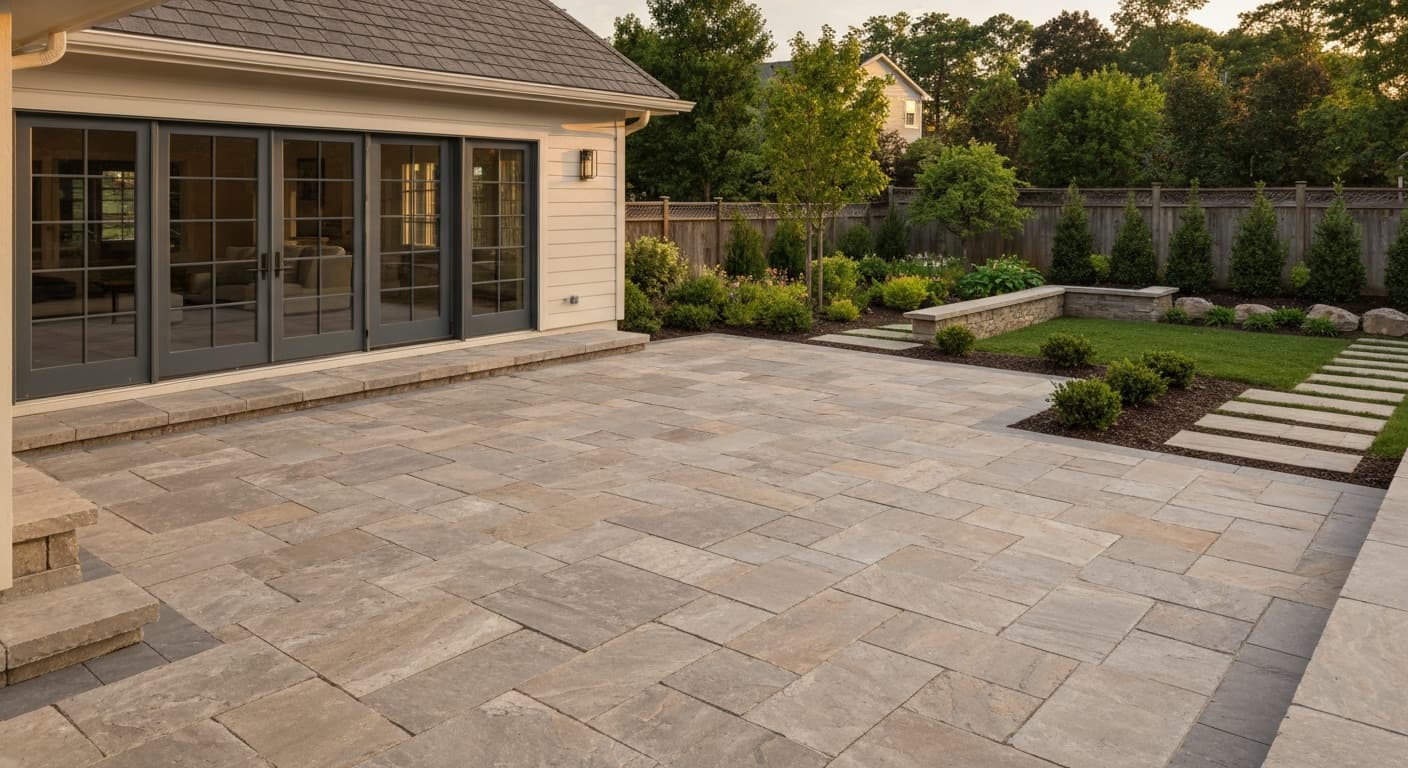
Tumbled or brushed travertine has a naturally open, slightly pitted surface. Wet, it grips well. That is the reason it dominates pool decks nationally.
Concrete pavers vary widely. A textured or shot-blast finish performs well wet. A smooth, slick, high-gloss modern paver does not, especially with sunscreen film on it. If you go concrete around a pool, insist on a textured face.
One caveat on travertine: filled travertine with resin-filled holes gets slicker as the fill polishes over years of foot traffic. Unfilled and tumbled holds texture longer.
Installed Cost Per Square Foot
Around Charlotte, typical installed ranges we see:
- Concrete pavers, standard shapes: $16 to $24 per sq ft
- Concrete pavers, premium textured or large-format: $22 to $32 per sq ft
- Travertine, standard French pattern or 16x24: $26 to $38 per sq ft
- Travertine with coping, bullnose edges, and mitered corners: $34 to $48 per sq ft
On a 700 square foot pool deck, that gap is roughly $7,000 to $10,000. Coping and edge details drive travertine higher than people expect, because every cut piece is slower and stone cutting eats blades.
Durability and Chipping
Concrete pavers are manufactured at high compressive strength, commonly 8,000 psi or better, and the color runs through the top layer. Drop a cast iron skillet on one and you usually get a scuff.
Travertine is a softer sedimentary stone. Drop the same skillet and you can chip a corner clean off. Patio furniture legs dragged across it scratch. It also has natural voids, and edges around those voids break more easily than solid stone.
The offsetting advantage: travertine chips reveal the same color underneath, so damage is less visually obvious than a chip in a colored concrete paver.
Freeze-Thaw and Moisture Absorption
This is the part most travertine sales conversations skip. Travertine is porous, with absorption rates commonly in the 2 to 5 percent range depending on the quarry. Concrete pavers made to hardscape standards typically absorb around 5 percent or less but are engineered specifically for freeze-thaw durability.
Charlotte does not get Minnesota winters, but we get real cycles. Nights below freezing after wet days happen repeatedly each January and February. Water inside saturated travertine freezes, expands, and pops small flakes off the face. That is spalling.
We have seen it most on travertine set over a poor-draining base, where the stone stays wet from below. A properly built open-graded base with fast drainage prevents nearly all of it. Travertine set on clay that holds water is asking for trouble. This is exactly why we do not shortcut the base on a travertine job in Mint Hill or Indian Trail, where red clay sits inches below the topsoil.
Pool Chemicals and Acid Sensitivity
Travertine is a calcium carbonate stone. Acid dissolves it. Muriatic acid used for pool cleaning, spilled acidic drinks, and even certain acidic fertilizers will etch a dull spot into the surface.
Concrete pavers hold up far better to pool chemistry. Chlorinated splash-out is a non-event.
If you choose travertine near a pool, plan on sealing with a breathable penetrating sealer every 2 to 4 years, budget roughly $0.75 to $2.00 per sq ft each time, and keep acid off it.
Charlotte Pollen, Oak Tannins, and Staining
Late March and early April coat everything in this city with yellow pine pollen. Pollen itself washes off both materials. The real staining problems are different.
- Oak tannins. Wet leaves left on light travertine leave brown outlines that need a poultice or oxygen bleach to lift. Concrete pavers stain too but hide it better in mid-tones.
- Iron in red clay. Runoff carrying clay across light travertine leaves rust-toned staining that is stubborn.
- Grease and food. Unsealed travertine near a grill absorbs oil quickly. Seal it before the first cookout.
- Rust from furniture feet. Both materials stain. Both clean with an oxalic acid product, except that product also etches travertine.
Color Fade, Joints, and Repairability
Travertine color is geological and does not fade. It weathers and slightly grays over decades, which most people like.
Concrete paver pigment does fade, especially strong reds and charcoals in full southern sun. Expect noticeable lightening over 10 to 15 years. Quality manufacturers with better pigment technology fade less.
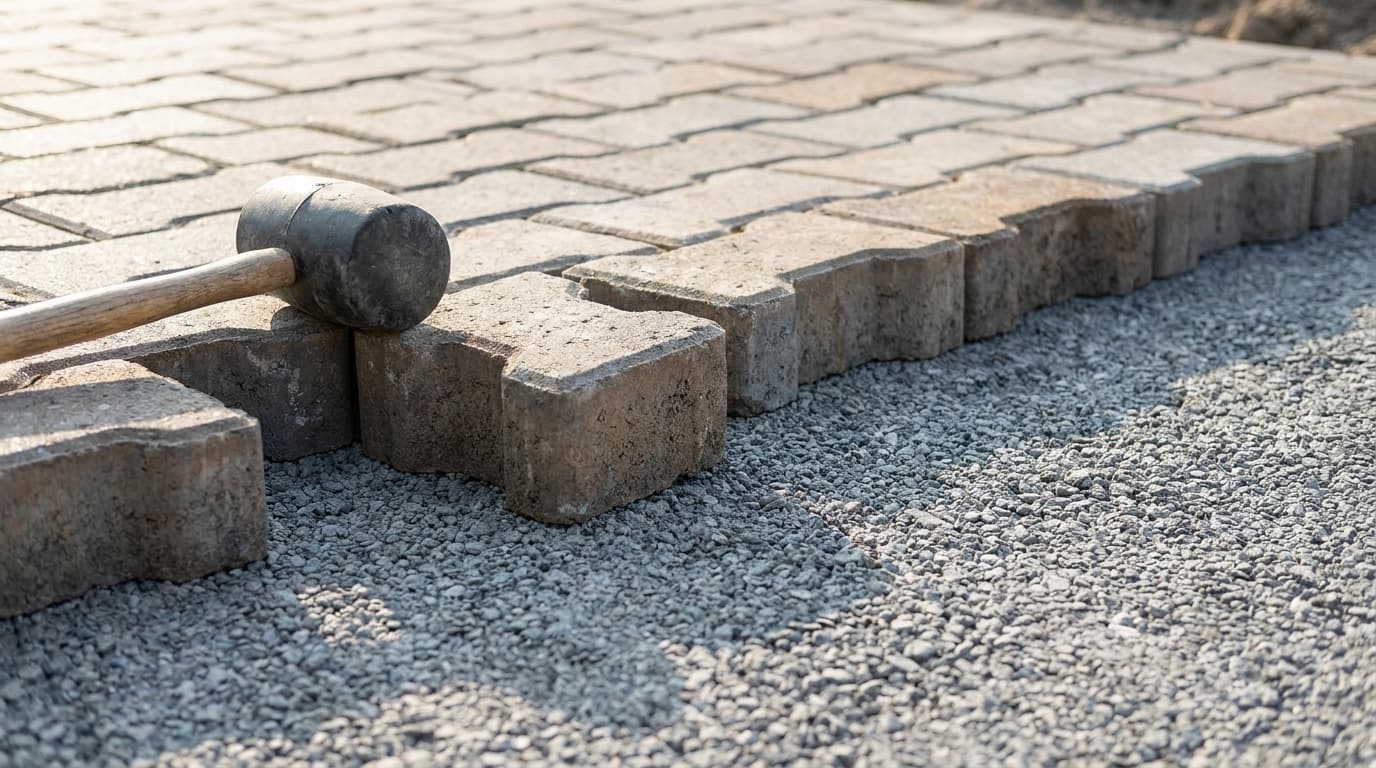
For joints, concrete pavers accept polymeric sand normally. Travertine set in a sand-set French pattern also takes polymeric sand, though the softer stone edges mean careful sweeping and low blower pressure. Many travertine decks get set on mortar over concrete instead, which changes repair economics completely.
Sand-set anything is repairable: lift the unit, fix the base, put it back. Mortar-set travertine over a slab is a demolition job to repair.
Pick Travertine If / Pick Concrete Pavers If
Pick travertine if:
- Barefoot comfort around a pool is your top priority
- You want a natural stone look with no repeating pattern
- Your budget absorbs $8 to $14 more per sq ft installed
- You accept sealing every few years as normal maintenance
- The area is not a driveway and not a heavy grill zone
Pick concrete pavers if:
- You want the lowest lifetime maintenance
- The surface will see vehicles, heavy furniture, or hard use
- Pool chemicals get handled near the deck
- You want easy unit-for-unit replacement in fifteen years
- Budget is the deciding constraint and you can choose a light color to manage heat
Honest Failure Modes for Both in North Carolina
Travertine fails by spalling on a wet base, by chipping at edges, and by etching from acid. All three are preventable and all three happen when someone skips the base or the sealer.
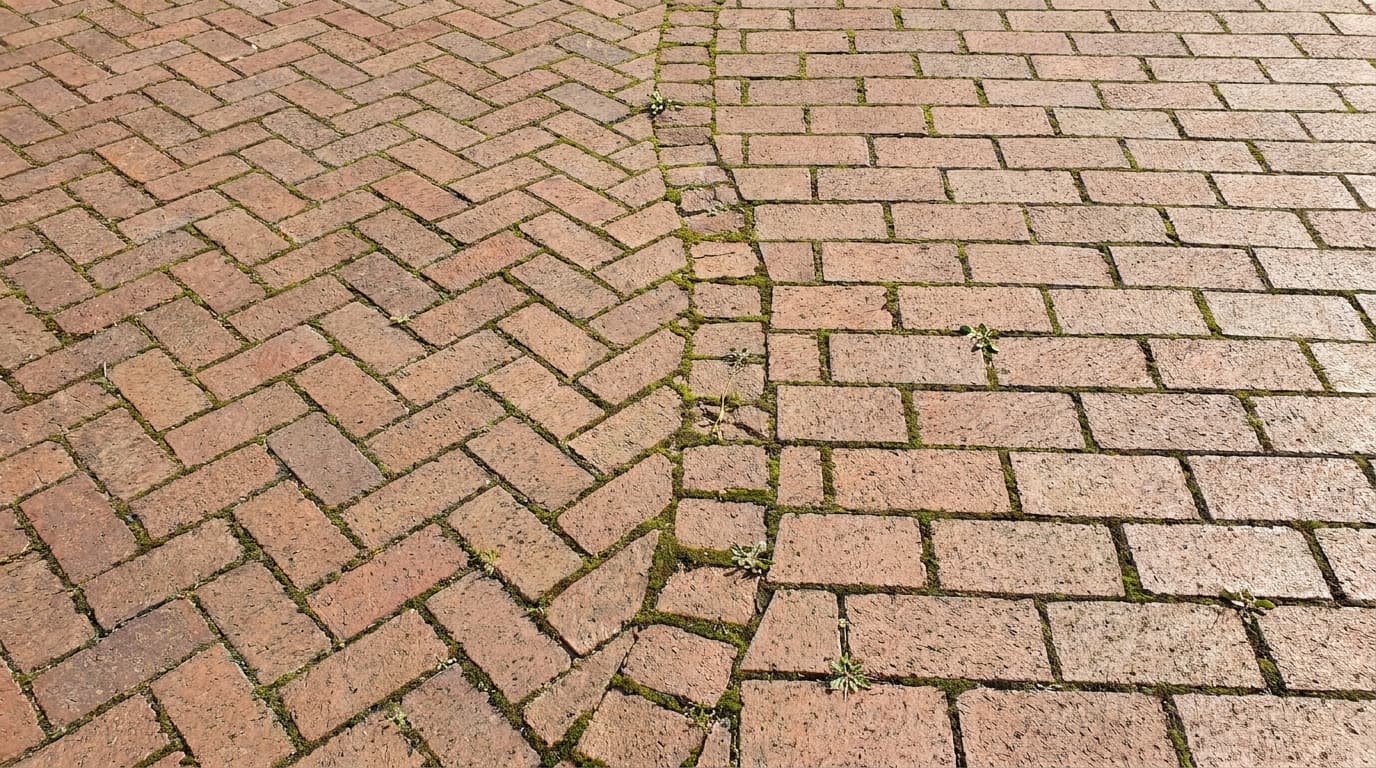
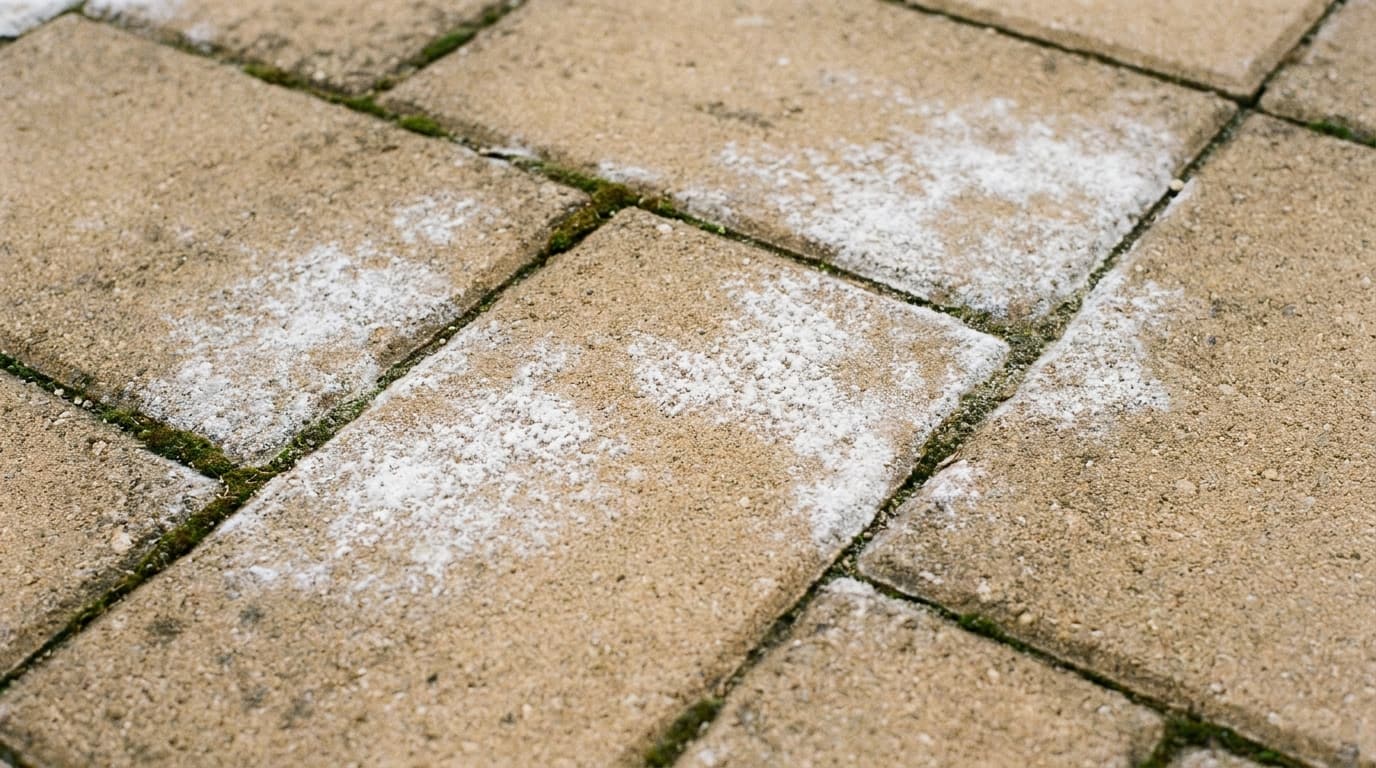
Concrete pavers fail by fading, by efflorescence hazing in the first year, and by getting uncomfortably hot in dark colors. Efflorescence is a white mineral bloom that usually clears on its own within 12 to 18 months or comes off with a dedicated cleaner.
Neither material fails from being the wrong choice. They fail from being installed on a base that holds water in Piedmont clay.
Frequently Asked Questions
Travertine, typically by 15 to 25°F on a hot afternoon, but color closes much of that gap. A light ivory concrete paver runs far cooler than a charcoal one. If heat is your main concern and budget is tight, choose the lightest concrete paver you can live with before you pay the travertine premium.
Around a pool or a grill, yes. A penetrating sealer every 2 to 4 years reduces absorption, which limits both staining and freeze-thaw spalling. Dry patio areas away from water can go longer. Use a breathable sealer. Film-forming sealers trap moisture and make spalling worse.
Yes, and it is common. Travertine for the pool deck and coping where bare feet live, concrete pavers for the walkway, driveway, and grill area. We do this often on Fort Mill and Waxhaw pool projects. Use a deliberate transition band so the change reads as design rather than as a budget seam.
Concrete pavers on a correct base commonly run 30 plus years structurally, with color softening along the way. Travertine on a well-drained base runs similar, with occasional individual replacements from chipping or spalling. In both cases, the base determines lifespan more than the surface material does.
Planning something similar? See how we approach paver patio installation in Charlotte and the surrounding metro, or find your town in our service area.
Get a Free Estimate
Bring us your pool deck square footage and we will price both materials side by side, including the base detail that makes either one last.
Get a Free Estimate