A driveway is the single largest hardscape investment most Charlotte homeowners make. The decision usually comes down to two materials: pavers or poured concrete. Both work. Both have trade-offs. After installing both across Mecklenburg County for a decade, I can tell you the paver driveway vs concrete charlotte question doesn't have a universal answer — but it does have a clear answer for your specific situation.
The short answer
Pavers last longer, look better, and cost more up front. Concrete is cheaper to install, faster, and easier to power-wash, but it will crack in Charlotte's freeze-thaw climate within 5–15 years and those cracks are visible forever.
Up-front cost comparison
For a 600 sq ft driveway in Charlotte in 2026:
- Plain poured concrete: $4,800–$7,200
- Stamped concrete: $9,000–$13,500
- Paver driveway (mid-grade): $12,000–$18,000
- Paver driveway (premium): $18,000–$25,000
So yes — a paver driveway costs roughly 2x to 3x plain concrete on day one. That's the part most homeowners stop at. The longer story is more interesting.
Lifespan in Charlotte's climate
Charlotte gets roughly 40–60 freeze-thaw cycles per year. Every cycle, water seeps into concrete micro-cracks, expands, and pries the slab apart from the inside. Combined with our heavy red clay (which swells and shrinks with moisture), the result is predictable:
- Plain concrete driveway: 20–30 years, with cracks appearing by year 5–10
- Stamped concrete: 15–25 years, cracks more visible and harder to patch
- Paver driveway: 30–50 years, individual units can be lifted and reset
The repair difference nobody mentions
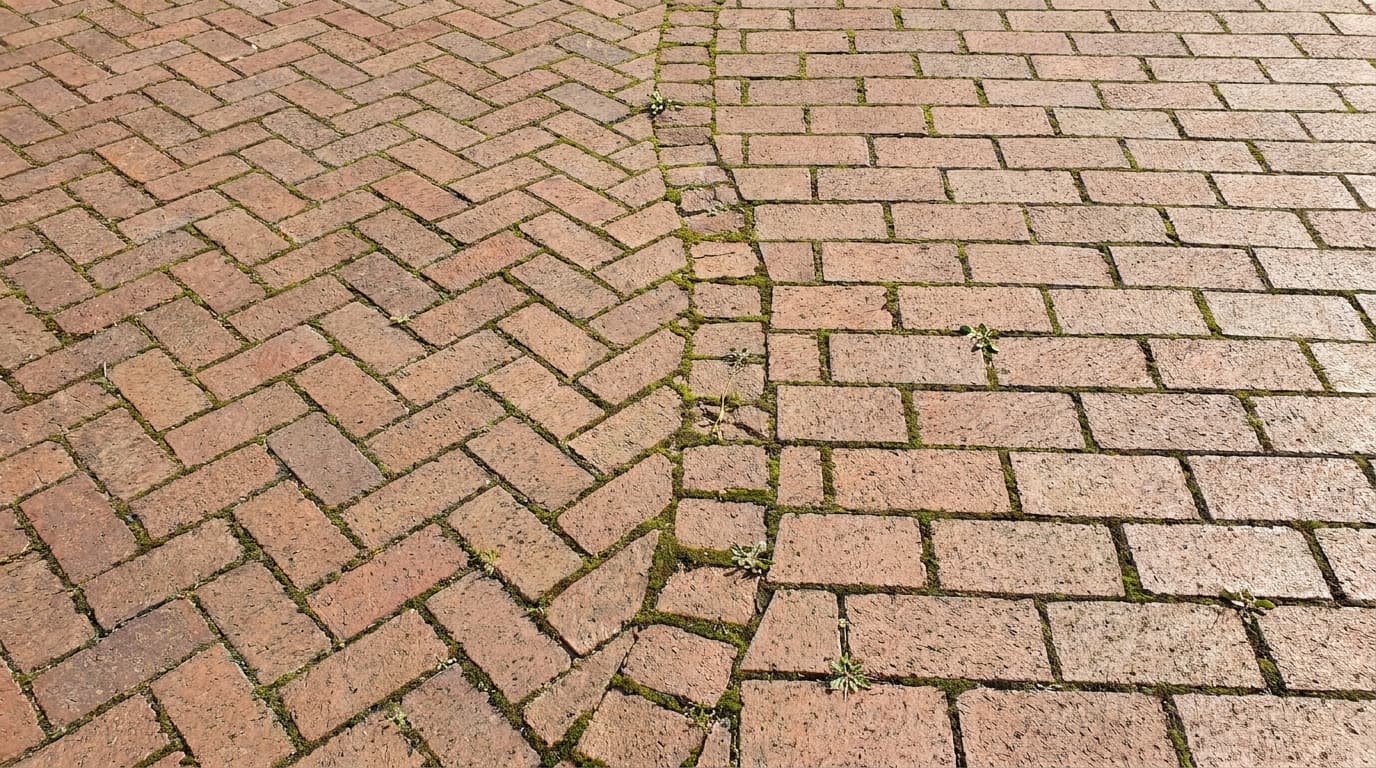
When concrete cracks, you have three choices: live with it, fill it (and watch the patch discolor), or saw-cut and replace a section (which never matches). When a paver shifts or stains, we pull that one paver, fix the base underneath, and drop it back in. Nobody can tell the repair happened.
This matters more in Charlotte than in flat regions because our clay subsoil moves. A poured slab can't move with it. Pavers can.
Curb appeal in Charlotte neighborhoods
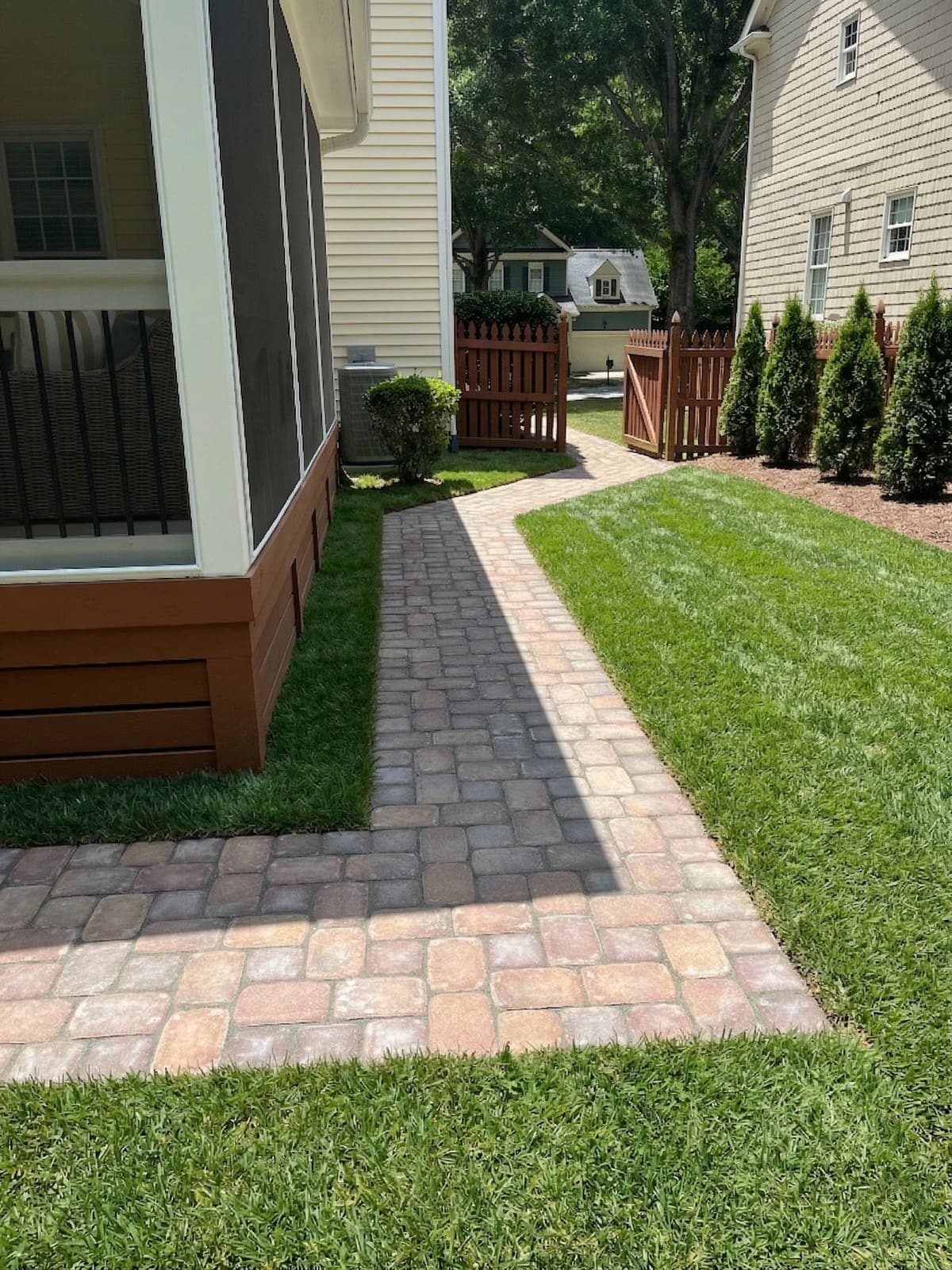
In Myers Park, Eastover, Ballantyne, and Providence Plantation, paver driveways consistently appraise higher and sell faster. In more modest neighborhoods, the gap narrows. If you're in a $400k–$700k home in Matthews, Mint Hill, or Indian Trail, a paver driveway can return 60–80% of its cost in appraised value — better than most kitchen remodels per dollar.
Heat and stain comparison
- Concrete absorbs oil stains permanently and shows tire marks
- Pavers can be individually swapped if one gets ruined
- Both get hot in Charlotte summer; lighter colors stay cooler
- Pavers drain better between joints, reducing puddling
When concrete actually wins
I won't pretend pavers are always the answer. Concrete makes more sense when:
- Budget is tight and you need the driveway done now
- The driveway is rarely seen (rental property, side lot)
- You're planning to sell within 2–3 years
- The slope is extreme and engineering favors a monolithic pour
When pavers clearly win
- You're staying in the home 10+ years
- The driveway is highly visible from the street
- You're in a neighborhood where curb appeal moves the needle
- You've had concrete fail before and don't want a repeat
- You want a design with borders, color blends, or curves
Base prep — where both succeed or fail
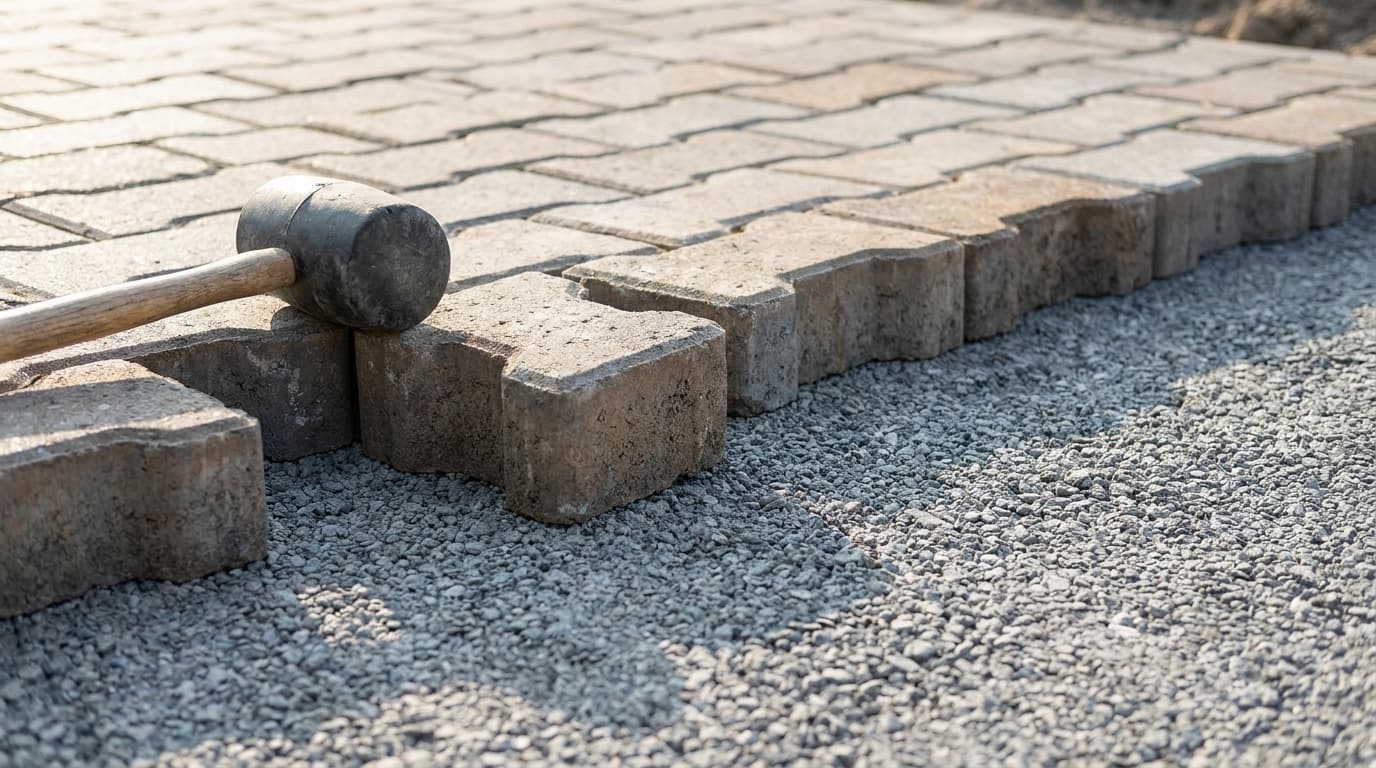
Whether you choose pavers or concrete, the base is everything in Charlotte. Our red clay needs 6–10 inches of compacted crushed stone under a driveway, with geotextile fabric between the clay and the stone. Skipping that step is why so many Charlotte driveways fail early — regardless of surface material.
A driveway in Huntersville we replaced last year had been poured directly on clay. It cracked into eight pieces within four years. The replacement paver driveway sits on 8 inches of compacted base and will outlast the house.
A practical recommendation
If you're staying in your Charlotte home for 10+ years and the driveway faces the street, pavers almost always win on lifetime value. If you're flipping or renting, concrete is the rational choice. If you're somewhere in between, get quotes for both and look at the 20-year cost, not the day-one cost.
Frequently Asked Questions
Yes — driveway-rated pavers are typically 2 3/8 inches thick and rated for vehicle traffic. Installed on a proper 6–10 inch base, they handle daily SUV and pickup truck use without issue. We don't use patio-thickness pavers for driveways.
A typical 600–800 sq ft paver driveway takes 5–8 working days depending on weather, demo, and base depth. Concrete is faster to pour but requires 7+ days of cure time before you can park on it.
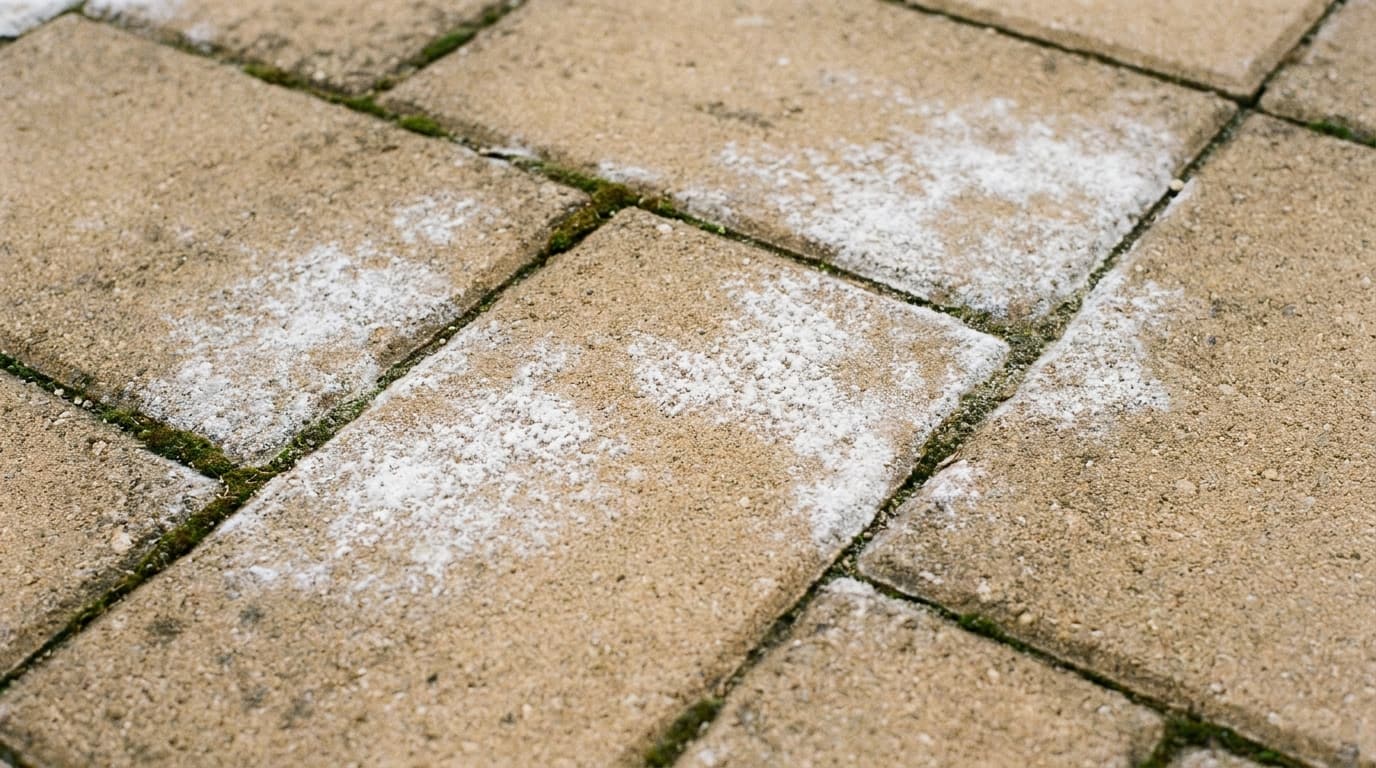
We recommend sealing every 3–5 years in Charlotte. It's not strictly required, but it deepens color, resists oil stains, and stabilizes polymeric sand in the joints — important given our heavy summer storms.
Properly installed polymeric sand resists weeds for years. If weeds do appear, it usually means the sand has eroded and needs to be re-applied — a quick maintenance step, not a defect.
Planning something similar? See how we approach paver patio installation in Charlotte and the surrounding metro, or find your town in our service area.
Get a Free Estimate
If you're weighing paver driveway vs concrete for your Charlotte home, we'll walk your driveway, look at the slope, soil, and visibility, and give you honest numbers for both.
Get a Free Estimate