Fire pit code in Charlotte NC splits along one line: wood-burning or gas. Everything downstream of that choice — permits, clearances, base construction, who is legally allowed to install it — depends on which one you pick. Homeowners usually pick based on ambiance. We would rather you pick knowing what each option obligates you to. Here is how the two paths differ and what we build into each.
Wood versus gas: the fork in the road
A wood-burning fire pit produces embers, high flue-less heat, and smoke that drifts wherever the wind takes it. Regulation focuses on open burning, spark travel, and distance to anything combustible.
A gas fire feature produces controlled flame and no embers. Regulation shifts almost entirely to the fuel system: piping, sizing, shutoffs, and who installs it.
Neither is safer in the abstract. A poorly built gas feature is more dangerous than a well-built wood one. But they are governed by different logic, and mixing up the two is where people get into trouble.
Clearance thinking for wood-burning pits
Numbers vary by jurisdiction and by product listing, so treat everything here as general guidance and verify with Mecklenburg County Code Enforcement and the Charlotte Fire Department.
The things you measure to:
- Structures. Distance from the house, garage, shed, and any covered porch. A commonly cited minimum for residential wood-burning features is around 10 to 25 ft, and manufacturer listings often set their own figure.
- Property lines. Smoke crosses lot lines even when flame does not. Some jurisdictions and many covenants set a minimum here.
- Fences. Wood privacy fencing is combustible and radiates heat poorly. Treat it like a structure.
- Overhead canopy. This is the one Charlotte homeowners forget. Mature willow oaks in Myers Park and Plaza Midwood put branches 15 to 20 ft over a patio. Rising heat dries and eventually ignites low limbs.
- Deck surfaces and combustible paving. Never place a wood-burning pit directly on a wood deck or composite decking.
Look up before you site a fire pit. Then look up again at the tree in leaf, not the tree in January.
Open burning, burn bans, and what you can burn
North Carolina regulates open burning at the state level, and local fire officials can issue burn bans during dry conditions. Recreational fires in a contained pit are generally treated differently from open burning of yard debris.
Practical rules we tell clients:
- Burn clean, seasoned firewood only. No yard waste, no construction lumber, no treated wood, no trash.
- Keep the fire small and contained inside the pit.
- Keep a hose or extinguisher within reach.
- Never leave it burning unattended.
- Check for an active burn ban before lighting during dry spells.
Confirm current restrictions with the Charlotte Fire Department or your town's fire marshal.
Gas features: the permit is not optional
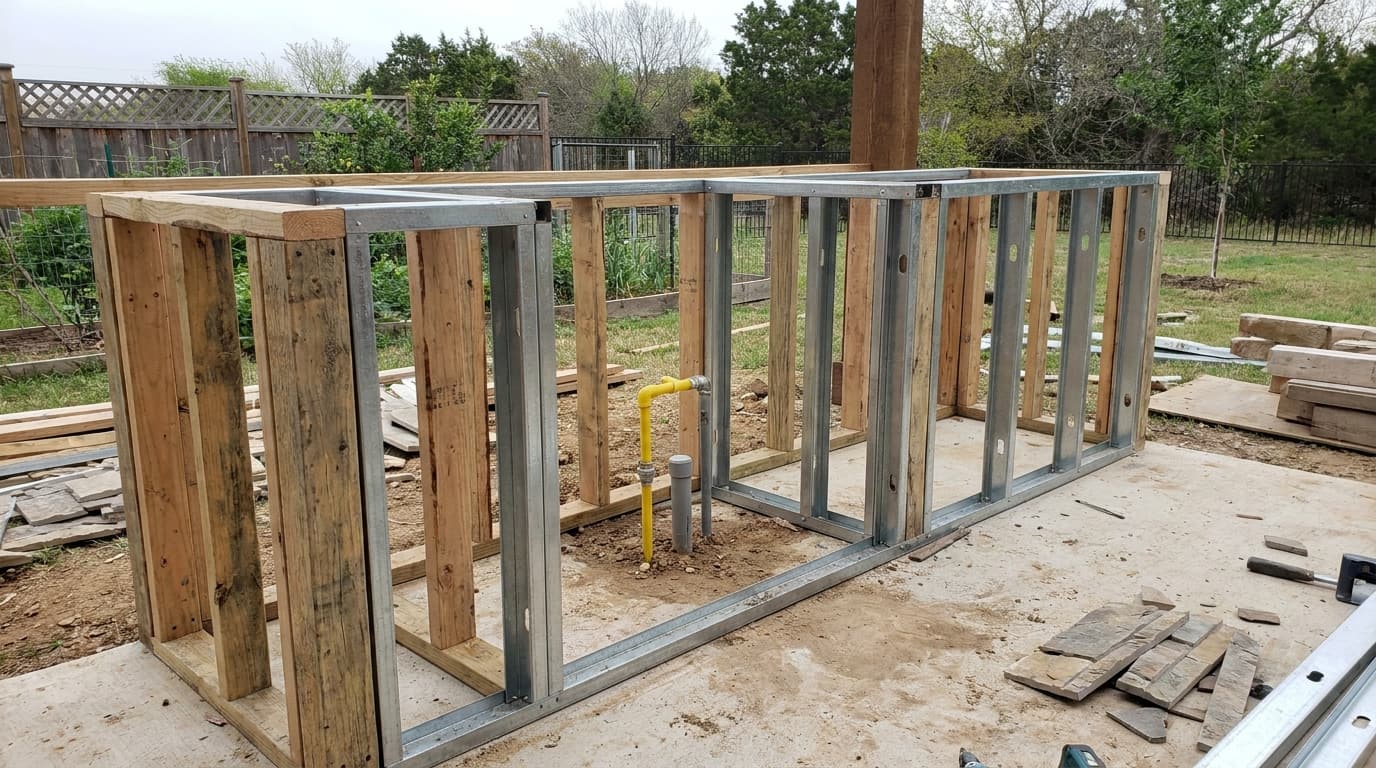
A fixed gas fire pit, fireplace, or burner connected to natural gas or a buried propane line is a fuel-gas installation. In most cases that requires a permit and a licensed plumber or gas fitter.
This is not a formality we push for liability reasons. The failure mode is gas accumulating in an enclosed pit body and igniting all at once.
What a proper installation includes:
- Correctly sized supply line for the burner's BTU demand and run length
- A shutoff valve in an accessible location outside the fire feature
- Pressure testing before the system is covered
- Adequate ventilation openings in the enclosure so gas cannot pool
- A listed burner and pan, not a shop-fabricated ring
- Inspection and sign-off on record
We coordinate with a licensed gas fitter on every gas feature we build. We set the masonry. They set the fuel.
Base and hearth: why standard pavers fail
This is the detail that separates a fire pit that lasts from one that crumbles in three seasons.
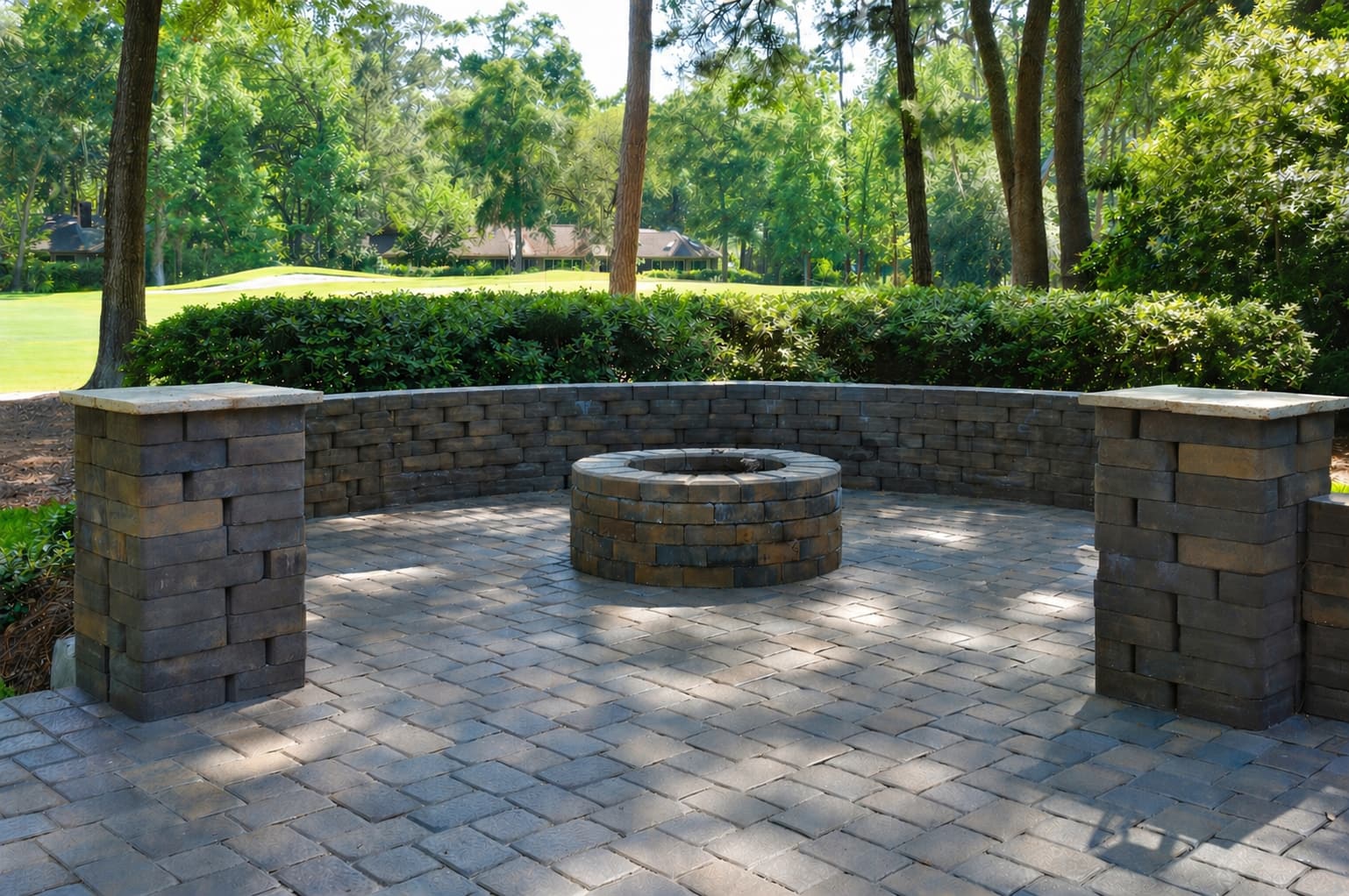
Concrete pavers and standard wall block hold moisture. Heat them repeatedly and that trapped moisture turns to steam inside the unit. The face pops off. That is spalling, and once it starts it does not stop.
How we build the burn chamber:
- Fire brick lining the interior of any wood-burning pit, set in refractory mortar
- A non-combustible base beneath the burn area, not turf and not wood
- A natural stone or purpose-made concrete cap, since caps take direct heat and thermal shock
- Drainage at the base so rainwater does not sit against the brick
- Decorative wall block only on the exterior face, never as the direct burn surface
For gas features, a listed burner pan, correct media depth, and ventilation openings replace the fire brick requirement — but the enclosure still needs to shed water.
A Cornelius job that changed the design
A client near Cornelius wanted a wood-burning pit at the back corner of a lakeside-adjacent lot. Gorgeous spot. It sat about 8 ft from a wood privacy fence and directly under a low-limbed maple.
We moved it. The new location cost him a longer walk from the back door and gained real clearance in every direction. We also switched him to a gas insert after he admitted the neighbors' windows faced that corner and smoke would have been a weekly conversation.
Good hardscape sometimes means talking a client out of the spot they fell in love with.
HOA and covenant overlays
Covenants can prohibit wood-burning features outright, restrict height, or require ARC approval for any permanent fire feature. Communities in Ballantyne, Waxhaw, and Weddington vary widely.
Read your declaration. Submit the design. And remember that municipal approval and HOA approval are separate — neither one covers the other.
Placement mistakes we see most often in Charlotte yards
Most fire feature problems are location problems, not construction problems. The build is sound; it just sits in the wrong spot.
- Under a mature oak or willow oak canopy. Charlotte lots are full of them. Radiant heat and embers rising into low limbs is a real risk, and dropped leaves land directly in the pit.
- Tight against a wood privacy fence. Fences are combustible and they are usually right at the property line, which stacks two problems together.
- Downwind of the covered porch. Prevailing wind carries smoke straight into the seating you just built.
- At the low point of the yard. In our clay soil, that bowl fills during an August thunderstorm and the pit sits in standing water for days.
- Directly over a septic field or utility run. Always check your plat and call 811 before excavating.
We walk the yard at the actual time of day the family plans to use it. That one habit prevents most of these.
Frequently Asked Questions
Commonly cited residential minimums fall in the 10 to 25 ft range depending on the feature type and manufacturer listing. Local requirements and covenants can be stricter. Confirm the applicable distance with Mecklenburg County Code Enforcement and the Charlotte Fire Department before you set the location.
In most cases yes. Fixed gas piping generally requires a permit and installation by a licensed plumber or gas fitter. Portable propane tank units that simply connect with a hose are usually treated differently. Verify your specific setup with Mecklenburg County Code Enforcement.
Not as the direct burn surface. Standard concrete pavers hold moisture and spall when repeatedly heated. Line the burn chamber with fire brick set in refractory mortar and use natural stone or a purpose-made cap. Decorative wall block is fine on the exterior face only.
It depends entirely on your covenants. Some communities allow them freely, some require ARC approval, and some prohibit permanent wood-burning features. Read your recorded declaration and submit a design for review before building. Municipal rules and HOA rules are enforced independently.
Planning something similar? See how we approach paver patio installation in Charlotte and the surrounding metro, or find your town in our service area.
Get a Free Estimate
Tell us where you want the fire, and we will walk the clearances with you on site before we quote a single block.
Get a Free Estimate