.jpg)
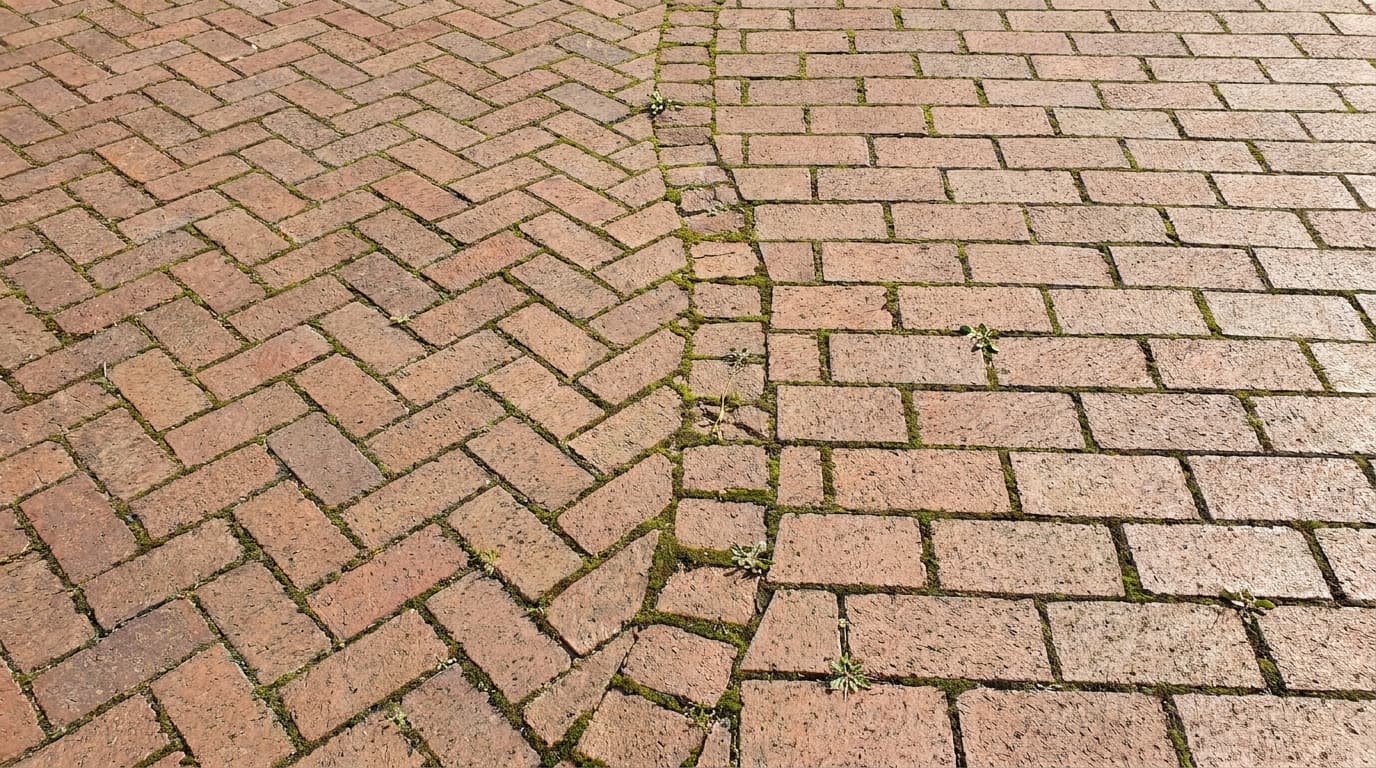
Polymeric sand pavers hold together at the joint, and the joint is where most Charlotte patios fail first. Choose the wrong material or install the right one badly, and you get washout after the first August thunderstorm, weeds by spring, and a white haze the homeowner blames on the pavers. Here is how the three real options compare, plus the myths that cost people money.
The Three Actual Choices
Polymeric sand. Graded sand blended with binders that activate with water and cure into a firm, slightly flexible joint. Sold in 50 lb bags.
Regular joint sand. Masonry sand or concrete sand swept dry into the joints. No binder. Cheap, forgiving, and it moves.
Open-graded joint stone. Washed angular chips, typically ASTM No. 8 or No. 9. Used with permeable systems and open-graded builds. Locks mechanically, drains freely, does not bind.
Each one is correct for a specific build. None of them is universally best.
Head to Head
| Factor | Polymeric sand | Regular sand | No. 8/9 stone |
|---|---|---|---|
| Weed resistance | Good, not absolute | Poor | Good |
| Ant resistance | Good | Poor | Good |
| Washout in heavy rain | Low when cured | High | Low |
| Haze risk | Real if installed wrong | None | None |
| Freeze-thaw behavior | Slight flex, can crack if brittle | Migrates | Excellent |
| Cost per bag | $30–$50 | $5–$10 | $8–$15 |
| Cost per sq ft installed | $0.40–$1.20 | $0.10–$0.30 | $0.25–$0.75 |
| Typical reapplication | 5–10 years | 1–3 years | Top off as needed |
Coverage varies enormously with joint width and paver thickness. A single 50 lb bag might cover 60 square feet of tight-jointed 60mm pavers or under 20 square feet of wide-jointed 80mm driveway units. Always buy by the calculator on the bag, then add a bag.
Five Myths Worth Killing
"Polymeric sand is permanent." It is not. UV, foot traffic, pressure washing, and freeze-thaw all degrade the binder. Expect 5 to 10 years on a shaded patio, less on a driveway or a full-sun pool deck. Plan on refreshing it, the same way you plan on repainting trim.
"It stops all weeds forever." Polymeric sand blocks weeds from germinating *from below*. Almost every weed you see in a paver joint germinated from seed and organic debris that landed *on top* — pollen, leaf litter, grass clippings. Keep the surface swept and you cut weed pressure more than any product does.
"Any sand works." Play sand and beach sand are too rounded and too fine. They will not lock, and they wash straight out. If you are using unbound sand, use properly graded masonry or concrete sand.
"You can install it damp." This is the single most expensive mistake. If the pavers are damp, the binder activates on the paver face instead of down in the joint. That is your haze. Surfaces must be bone dry.
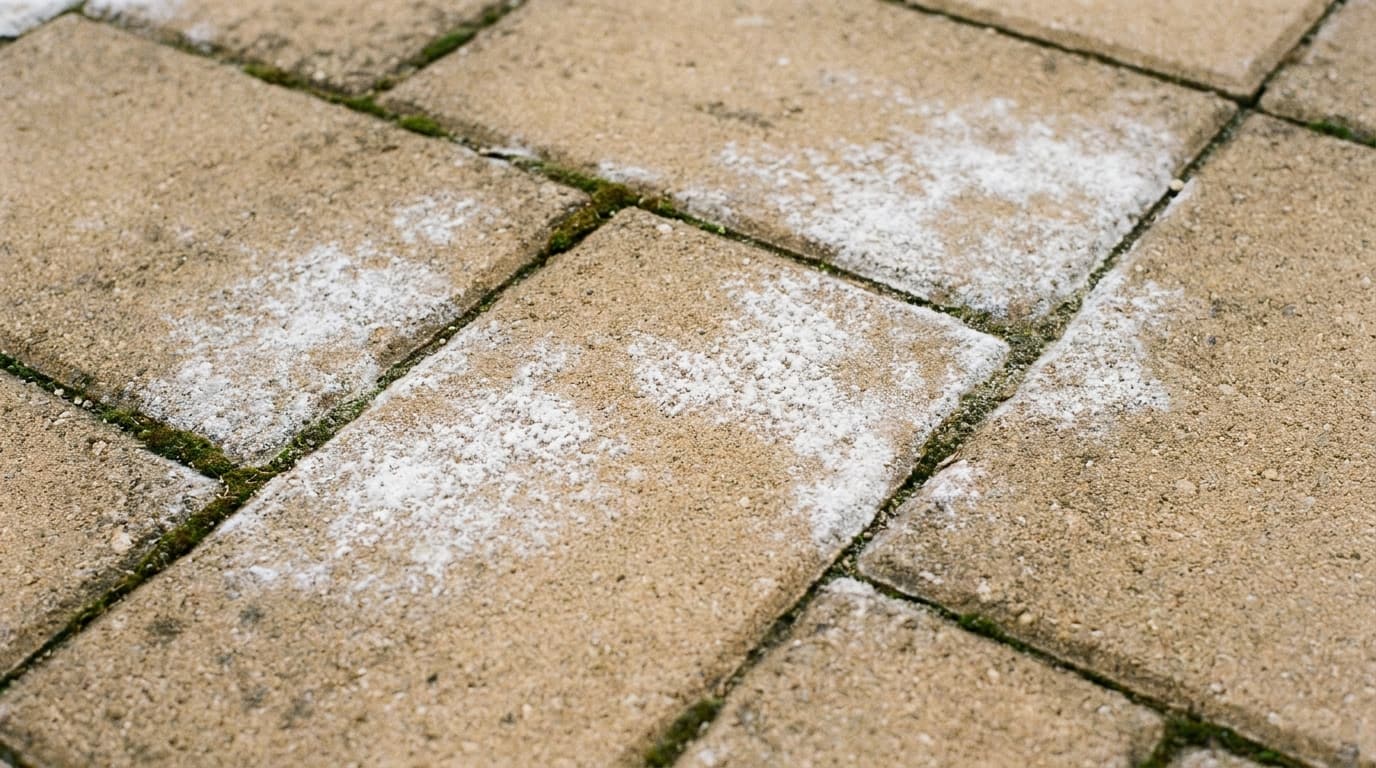
"Haze is the product's fault." Almost never. Haze comes from residue left on the paver surface before watering — dust not blown off, sand left in surface texture, or watering too aggressively so slurry floats up and dries on top. Textured and tumbled pavers hold residue in their surface texture and need extra attention with the blower.
The Install Sequence That Actually Works
Order matters more than brand. Every step below exists because skipping it causes a specific failure.
- Confirm dry. Pavers dry, joints dry, forecast clear for 24 hours minimum. Charlotte summer humidity slows curing, so give it more time in July and August.
- Check joint depth. You need at least 1 to 1.5 inches of sand depth in the joint. Shallow joints crack and pop out. If old sand has washed down, remove and refill rather than topping off.
- Sweep in stages. Fill the joints, then sweep diagonally across the pattern so you are not dragging sand back out of the joints.
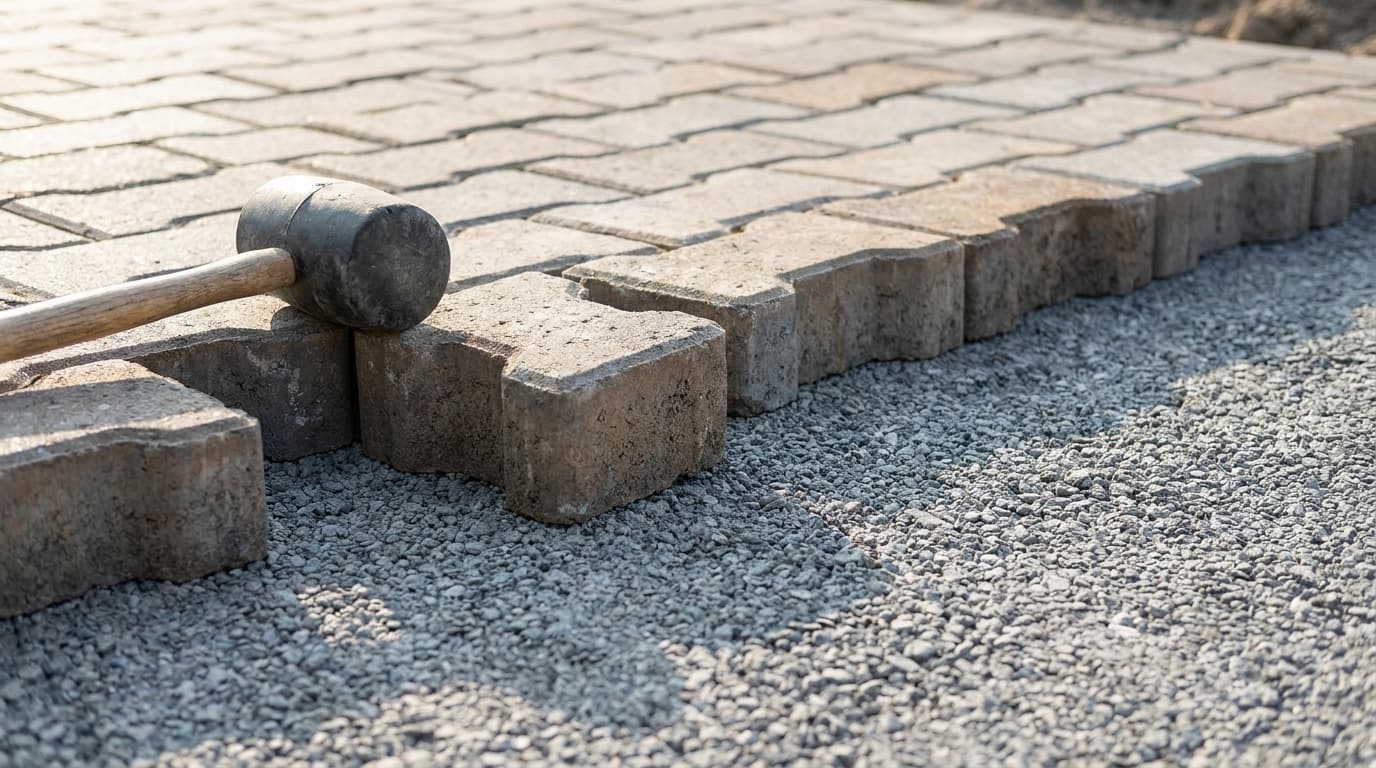
- Compact with a plate compactor and a protective mat. Vibration settles sand into voids. Then sweep in more, because the level will drop.
- Blow the surface clean. Leaf blower on low, held at an angle, never straight down into the joints. Keep going past the point where it looks clean. This is the step that prevents haze.
- Water in stages. Light shower setting. Wet, pause, let it absorb, repeat. Typically two to three passes. Flooding the surface floats binder up and out.
- Keep everything off it for 24 hours, longer in high humidity.
Charlotte Weather Is the Real Test
Two local conditions punish sloppy joint work.
Pop-up thunderstorms. A storm cell can drop 1 to 2 inches in under an hour here in July and August. Uncured polymeric sand under that kind of rain turns into a foam-like crust and washes out of the joints in gray rivers across the pavers. We have watched it happen on a job in Indian Trail when a forecast changed at 4 p.m. Now we simply do not install joint sand if the radar looks uncertain — we come back the next day.
Summer humidity. Dew point in the mid-70s means the surface may never fully dry overnight. Morning installs on a humid week are a gamble. Afternoon, after the surface has baked for a few hours, is the safer window.
Freeze-thaw. Charlotte does not have brutal winters, but we cycle above and below freezing dozens of times between December and February. Water in a poorly filled joint expands and works pavers loose. A full, dense joint is the cheapest freeze-thaw protection you can buy.
Where Each Material Belongs
- Standard patios and walkways on a compacted dense-graded base: polymeric sand. Best all-around performance for a Myers Park or Dilworth patio.
- Driveways: polymeric sand, driveway-rated formulation, joints filled full depth. Expect earlier reapplication from tire scrub.
- Pool decks: polymeric sand, but choose a formulation tolerant of frequent wetting, and rinse chlorinated splash-out.
- Permeable pavers: never polymeric sand. Use No. 8 or No. 9 clean stone. Binding a permeable joint destroys the entire drainage system you paid a premium for.
- Open-graded builds and flagstone with wide joints: open-graded stone or a purpose-made wide-joint product. Standard polymeric sand cracks in joints wider than the manufacturer's stated maximum, often around 1 to 1.5 inches.
- Budget repairs and temporary fixes: regular masonry sand is honest and cheap. Just know you will redo it.
Frequently Asked Questions
For most Charlotte patios and driveways, yes. You are paying roughly three to five times the material cost of plain sand to get years of washout resistance, fewer weeds, and a joint that survives thunderstorms. On a 400 square foot patio the price difference is often only a few hundred dollars, which is small next to the labor cost of resanding every other year.
Haze is almost always an install condition problem, not a defective product. Damp pavers, dust left in the surface texture, or flooding the surface with water all cause binder to cure on top of the paver instead of inside the joint. Textured and tumbled pavers are most at risk. Prevention is simple: dry pavers, thorough blowing, gentle multi-stage watering.
Plan on 5 to 10 years for a patio and sooner for a driveway. Sun exposure, traffic, and pressure washing all shorten the interval. You do not always need a full removal. If the joint has dropped but the remaining sand is sound, you can clean, refill, and re-water the low areas.
No. Permeable joints must stay open so water can pass through into the stone reservoir below. Polymeric sand binds and seals those joints, which eliminates infiltration and defeats the purpose of the system. Permeable joints take washed angular stone, typically ASTM No. 8 or No. 9, refreshed during routine vacuum maintenance.
It reduces them substantially but does not eliminate them. Weeds mostly grow from seed and organic matter that settles on the surface and works into the top of the joint. Regular sweeping, keeping leaf litter off, and refilling low joints do more for weed control than any single product choice.
Planning something similar? See how we approach paver patio installation in Charlotte and the surrounding metro, or find your town in our service area.
Get a Free Estimate
If your joints are washing out or hazing over, we will look at the base underneath before we talk about sand, because the joint is usually a symptom.
Get a Free Estimate