A wood-fired pizza oven is the single upgrade we get asked about the most that isn't a grill, and it's also the one homeowners most often misjudge on cost and footprint before we walk them through it. There's a real difference between a built-in masonry oven and a prefab insert, and picking the right one for your yard and your budget matters more than the brand name on the door. It's also one of the few outdoor kitchen additions that changes the shape of the whole layout around it, so getting the decision right early saves real rework later.
Built-in masonry vs prefab insert
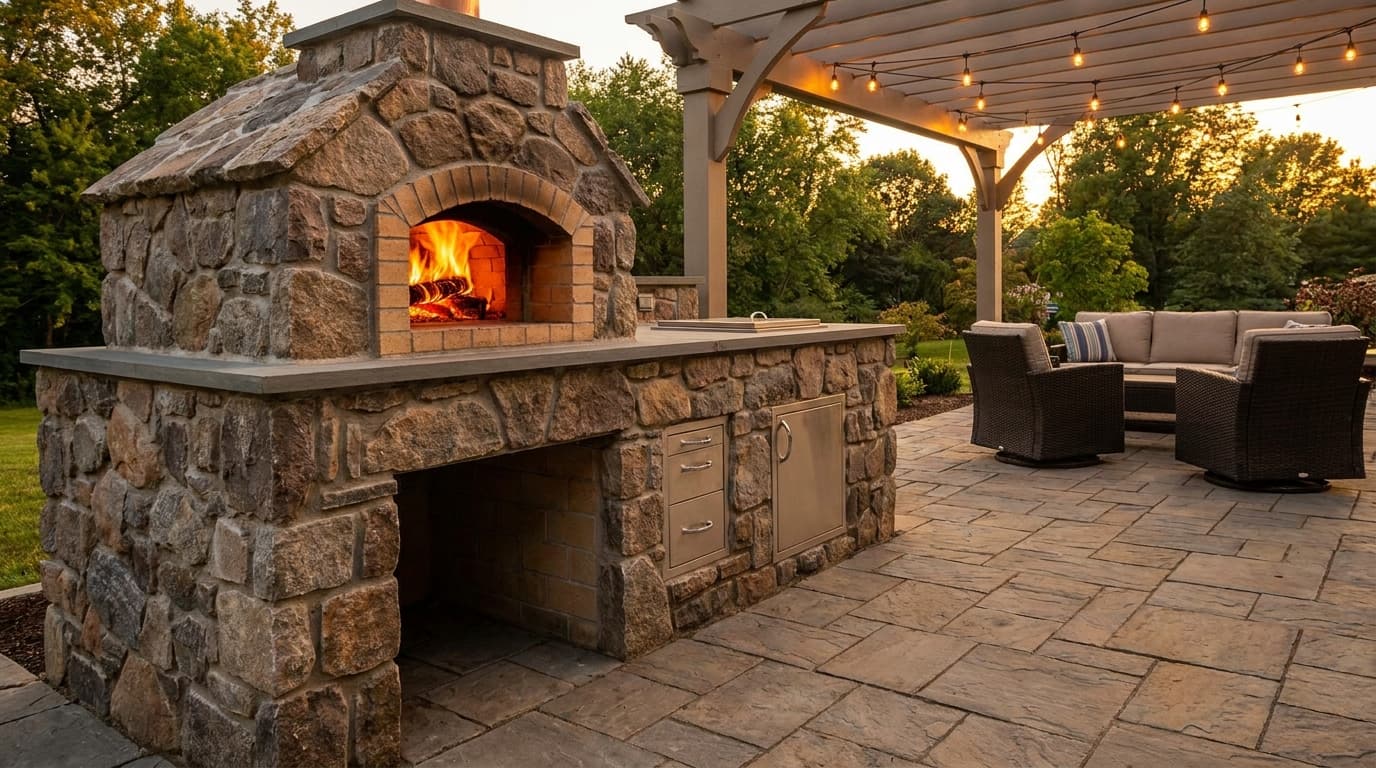
A built-in masonry pizza oven is constructed on site — firebrick dome, insulation layer, and a stone or stucco exterior shell built to match the rest of the outdoor kitchen. It's a permanent structure with real thermal mass, meaning it holds heat for hours after the fire dies down, which matters for baking multiple pizzas back to back or slow-roasting after the pizza course is done. A prefab insert is a manufactured oven unit, often stainless or a refractory shell, that drops into a pre-built masonry surround. It's faster to install and costs less, but has less thermal mass and generally a shorter usable lifespan than a fully masonry-built oven.
Cost ranges for each option
- Prefab insert, installed in a simple stone surround: $6,500-$11,000
- Mid-range built-in masonry oven with stone veneer to match the kitchen: $13,000-$20,000
- Full custom masonry oven with a decorative chimney and premium stone facade: $22,000-$35,000+
The gap between prefab and full masonry isn't just materials — a masonry oven's dome takes a skilled mason several days to build correctly, and the labor on that dome alone is a meaningful share of the total cost.
Clearance, ventilation, and fire-safety requirements
Wood-fired ovens need real clearance from anything combustible — we hold a minimum of 36 inches from the oven's face and sides to any wood structure, pergola beam, or overhanging roofline unless it's specifically fire-rated and detailed for that clearance. The chimney needs to extend high enough to vent smoke away from seating areas and any covered structure overhead, typically a minimum of 3 feet above the roofline of an attached cover. We also grade the oven's base and surrounding pavers so ash and ember cleanup has a defined, non-combustible zone in front of the door, not lawn or mulch.
Fitting the oven into an outdoor kitchen island footprint
A pizza oven adds real footprint — figure 4-5 feet of island width dedicated to the oven and its immediate counter space, on top of whatever the grill and other appliances already need. On a single-run island, that often pushes the total island length past 12-14 feet, which is why pizza ovens more often end up as a separate structure or an L-shaped extension off the main kitchen run rather than squeezed into a straight line with everything else. We plan the oven's orientation early, too — the door should face away from prevailing wind and away from the main seating area so smoke drifts clear rather than into the dinner table.
Wood storage and fuel considerations
A wood-fired oven needs a steady supply of dry, seasoned hardwood — oak and hickory are the most common choices in the Charlotte area and both burn hot and clean once properly seasoned, which takes 6-12 months of dry storage after splitting. We factor a dedicated wood storage area into the layout near the oven, usually a stone or masonry rack sized for at least a quarter cord, so fuel isn't stacked loose against the house or left exposed to rain, which slows seasoning and invites pests. A well-stocked rack also just looks intentional next to a masonry oven rather than an afterthought pile of logs at the edge of the patio.
Realistic maintenance
A masonry pizza oven needs the flue and chimney inspected and cleared of creosote buildup roughly once a year with regular use, similar to an indoor wood-burning fireplace. The firebrick floor should be swept clean of ash before and after each use, and the exterior stone or stucco shell needs the same sealing schedule as the rest of the kitchen's stonework, typically every 2-3 years. A prefab insert's metal components can show wear faster in high-heat cycling, and depending on the manufacturer, replacement parts availability is worth checking before buying. Either style benefits from a simple cover or enclosure during long stretches of disuse over the winter, which keeps wind-driven rain out of the flue opening and cuts down on the freeze-thaw stress that's harder on masonry joints than the fire itself ever is.
A real Charlotte scenario: pizza oven build in Fort Mill, SC
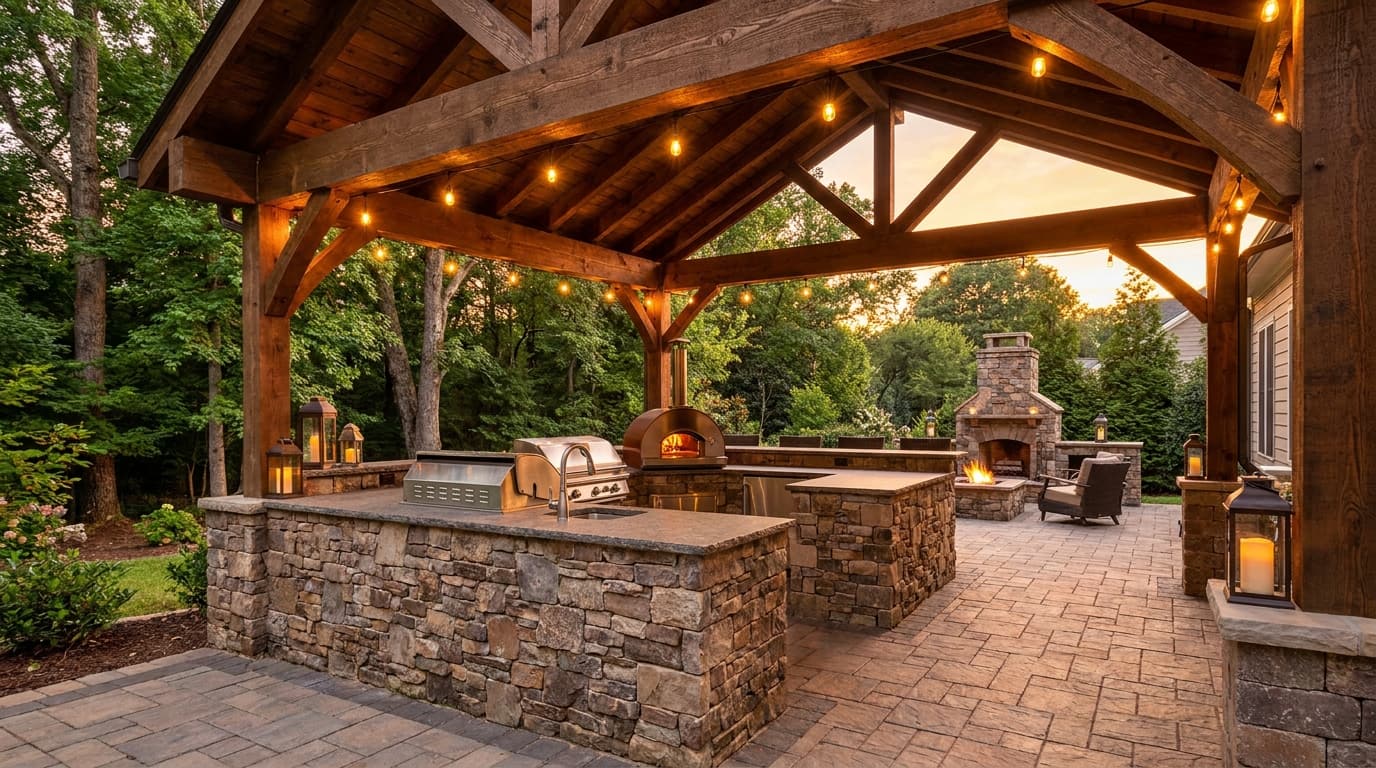
A Fort Mill homeowner wanted a full outdoor kitchen with a mid-range built-in masonry pizza oven as the centerpiece, set at an angle off the main grill island to keep smoke away from a dining area. The masonry oven with a firebrick dome and stone veneer shell ran $16,800, the surrounding L-shaped island with grill, storage, and counter added $14,200, and the paver patio tying the whole layout together added $6,900. Total: $37,900. We also built in a quarter-cord wood storage rack faced in the same stone veneer as the oven, so the fuel supply reads as part of the design instead of a pile of logs off to the side.
The angled placement turned out to matter more than the homeowner expected once the oven was actually in use — with the door facing away from the dining table and the prevailing evening breeze, smoke consistently drifted toward the side yard instead of over guests, something that's much harder to correct after a masonry structure is finished than it is to plan for during layout.
Frequently Asked Questions
A properly built masonry oven reaches 700-900°F at the dome for true Neapolitan-style pizza, cooking a pie in 90 seconds to 2 minutes once it's fully heated, which typically takes 45-60 minutes of fire building beforehand.
Yes — gas-assisted or gas-only inserts exist and light faster with more consistent heat, but most homeowners who specifically want a pizza oven want the wood-fired flavor and experience, so we default to wood unless a client tells us convenience matters more.
Realistically plan for a 16x18 foot patio footprint or larger to comfortably fit an oven, a full kitchen run, and enough clearance and seating around both without the space feeling cramped.
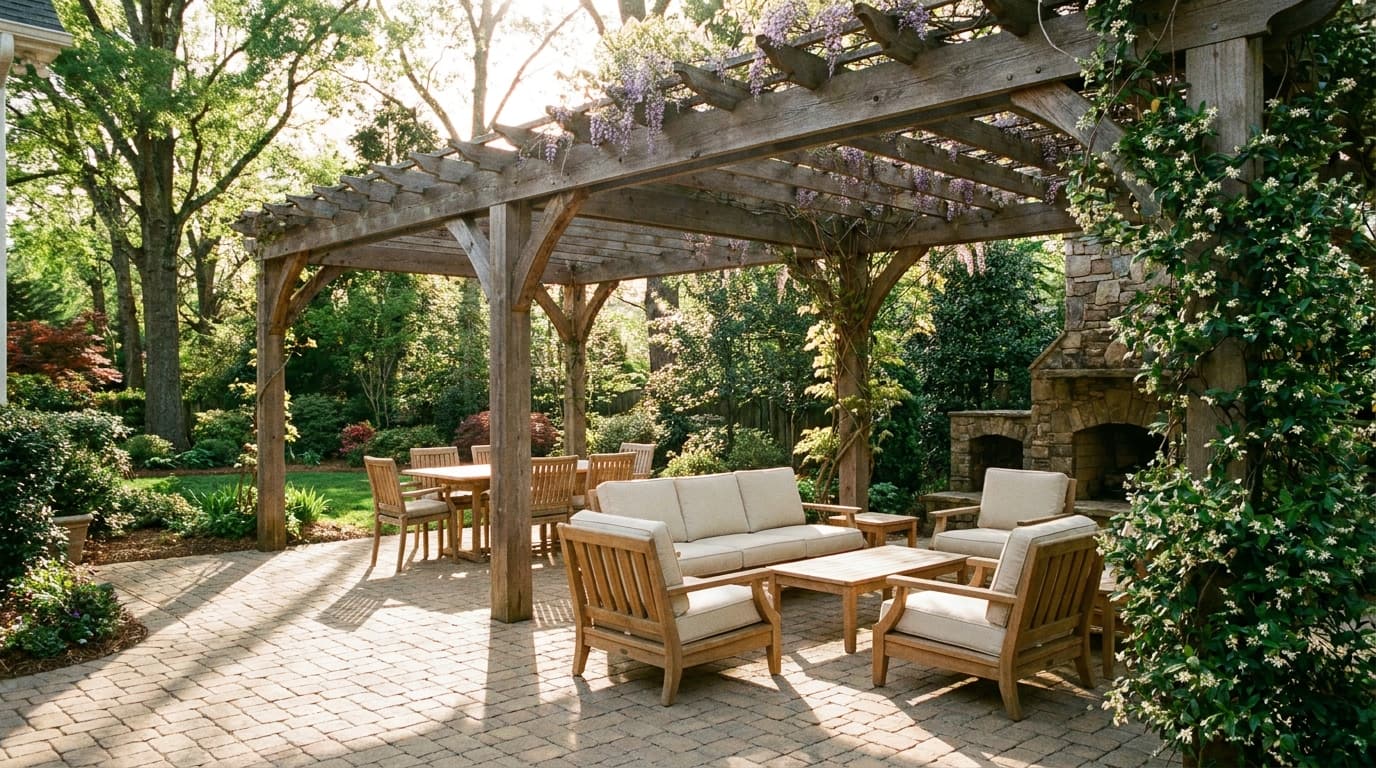
Yes, but the two need to be planned together — the chimney height and clearance requirements change once a roof or pergola is added overhead, so we always design the oven and any cover as one system rather than adding a cover later and discovering the chimney doesn't clear it properly.
Planning something similar? See how we approach paver patio installation in Charlotte and the surrounding metro, or find your town in our service area.
Get a Free Estimate
Tell us if a pizza oven is on your wish list and we'll show you exactly where it fits — and what it costs — in your outdoor kitchen layout.
Get a Free Estimate